Skip to main content

How Long Does Crawl Space Repair Take? Timelines by Job Type
Most crawl space repairs in Shreveport take 1 to 5 days. This guide breaks down timelines by job type, what slows the work down, and how to plan around it.
So how long does crawl space repair take? For most Shreveport homes, the answer is 1 to 5 days of work. Minor wood repairs and support fixes often finish in a day, while beam replacement, extensive structural repair, or full moisture control usually run 3 to 5 days. The inspection comes first, and that takes about an hour or two.
Those numbers surprise a lot of homeowners — usually in a good way. Crawl space work happens underneath the house, not inside it: no torn-out floors, no moved furniture. Most of what you will notice is the sound of tools and the occasional thump when a beam gets set.
Crawl Space Repair Timelines by Job Type
It starts with what kind of repair your house needs. A sagging floor in one hallway and a full structural rebuild are both “crawl space repair,” but they are not the same job. Here is what each common job type typically runs in the Shreveport area:
| Job Type | Typical Timeline | What the Crew Does |
|---|---|---|
| Sill plate and minor wood repair | 1 day | Cut out rotted sections, sister or replace joists, treat remaining wood |
| Support posts and pads | 1 day | Add or replace support posts on new concrete pads, shim to level |
| Single beam replacement | 1–2 days | Temporary supports, remove failed beam, set new beam, re-shim |
| Full structural framing repair | 2–4 days | Multiple beams and joists, new piers, complete re-leveling of the floor system |
| Crawl space drainage and sump pump | 1–3 days | Interior perimeter drain, sump basin and pump, discharge line to daylight |
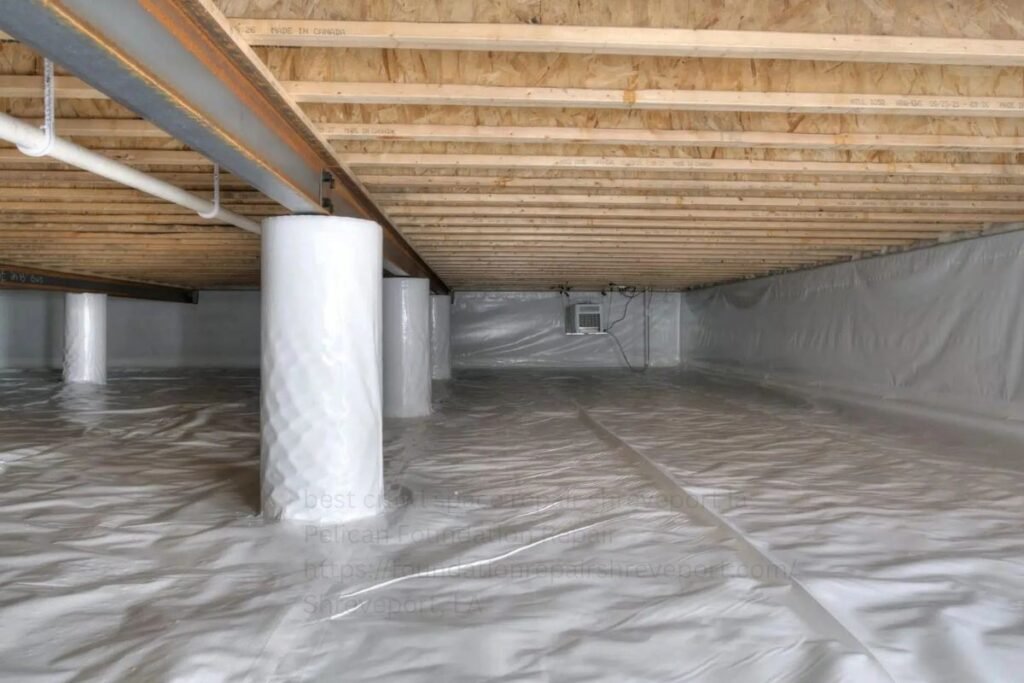
| Encapsulation and dehumidifier | 2–4 days | Heavy-duty liner, sealed vents and gaps, dehumidifier install and setup |
| Combined structural + moisture repair | 3–5 days | Framing repair plus drainage and encapsulation in one coordinated project |
Two things the table does not show: the inspection is a separate 1-to-2-hour visit before any work starts, and scheduling usually runs 1 to 3 weeks out — longer in spring, when rain keeps every foundation crew in northwest Louisiana booked solid. Combined jobs also overlap rather than stack: the structural crew finishes the framing and the moisture team comes in right behind, which is why a big combined job lands at 3 to 5 days instead of 8.
What Happens During the Free Inspection
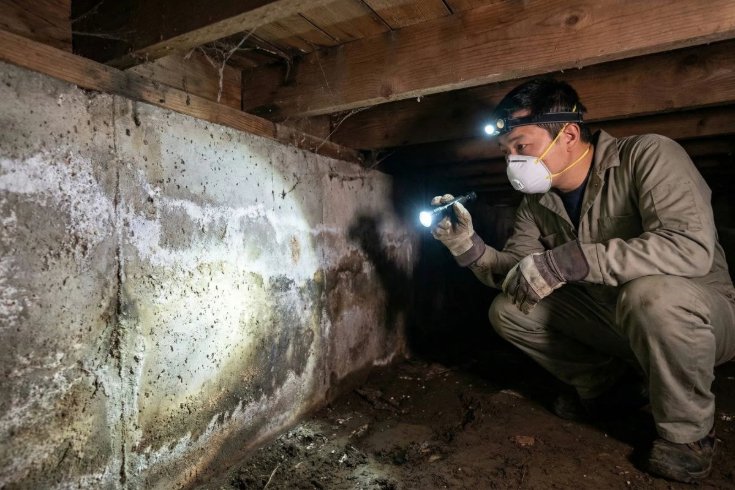
Every timeline starts with the inspection, and a thorough one is what keeps the job on schedule. A real inspection takes 1 to 2 hours and follows a clear sequence.
The visual crawl-through
The inspector goes under the house with a headlamp and checks the beams, joists, sill plates, and support posts for rot, termite damage, sagging, and shifted supports, photographing every problem spot. In older neighborhoods like Broadmoor and South Highlands, this takes the longest — those 1950s–1970s pier-and-beam homes have a lot of history underneath. Not sure yours needs it? See how to know if your crawl space needs repair first.
Moisture and wood readings
Next, a moisture meter goes against the wood framing in several spots — readings above the mid-teens are a red flag in our climate. The inspector also notes standing water, condensation on ductwork, and damp ground. After a wet spring, which Shreveport gets regularly, half the crawl spaces in the 71105 and 71106 ZIPs hold water, and that shapes the repair plan.
Elevation check and written findings
Elevation readings map exactly where the house has settled and by how much. Then you get written findings: what is wrong, what the fix is, what it costs, and how long it takes. If a contractor will not put that in writing, keep looking.
What Can Make a Crawl Space Job Take Longer
Most jobs finish inside the table ranges. When one runs long, it is almost always one of these — and a good inspector flags the likely ones up front:
- Tight clearance: some older Shreveport crawl spaces are barely 18 inches tall. Everything moves slower when the crew is army-crawling with tools.
- Hidden rot discovered mid-job: once the crew opens up a beam bay, they sometimes find damage the inspection could not see. Reputable companies stop, photograph it, and get your approval before adding the repair — that conversation and the extra work add a day.
- Standing water: if the crawl space is holding water, the first half-day goes to pumping it out. Drainage work may need to be added to the plan.
- Mold remediation: surface mold on joists is common in our humid climate. Light treatment adds hours; heavy remediation with containment can add a day or two.
- Deep or unstable soil under new supports: in parts of Shreveport built on soft clay or old fill — near the Red River bottoms and some Cross Lake low areas — new support posts may need deeper footings, which slows the structural phase.
- Weather: a week of heavy rain from a tropical system can push an outdoor-access job back. Crews cannot dig or pour in a flooded crawl space.
- Permits: structural work sometimes needs a parish or city permit, and permit turnaround adds calendar days before the first tool comes out.
Notice what is not on that list: the crew dragging its feet. Experienced crews work fast. When a job stretches, it is the house or the weather — not the work ethic.
Structural Repair vs. Moisture Control: Two Different Clocks
Think of crawl space repair as two jobs that often happen to the same house. Structural repair fixes the wood and supports holding your floors up. Moisture control fixes the water and humidity rotting that wood: drainage, sump pumps, encapsulation, dehumidifiers. Each has its own timeline.
Structural work is usually faster because it is mechanical: pull the bad wood, set the good wood, level it, done. Moisture work is coverage work — lining every inch of ground, sealing every vent — so an average 1,200-to-1,800-square-foot Shreveport crawl space takes 2 to 4 days to encapsulate properly. Rushing the liner is how you get wrinkles, gaps, and callbacks.
In our clay soil, these two jobs are connected. Expansive clay holds water, wet springs keep crawl spaces damp for months, and damp wood rots — fix the structure without the moisture and you will repair the same beams again in a few years. That is why so many local jobs are combined. For the moisture side, see our guide to how long crawl space encapsulation lasts.
Can You Stay Home During Crawl Space Repair?
Yes — and almost everyone does. The crew works through an exterior access opening, so you go about your day above them with utilities on and furniture in place. The kids and the dog stay put.
What you will notice is noise: impact drivers, saws, and the thump of beams being set, muffled by your floor system. If you work from home, noise-canceling headphones handle the worst of it. Practical tips: keep pets away from the access opening, move cars out of the driveway so the crew can stage materials, and point out any buried lines near the access point. Crews clean up daily, so your yard never turns into a job site.
Why Shreveport Soil Changes the Crawl Space Timeline
Northwest Louisiana soil is the quiet variable in every local timeline. The USDA’s Web Soil Survey maps much of Caddo and Bossier parishes as expansive clay — soil that swells when wet and shrinks when dry. Wet springs saturate it, hot summers bake it, and tropical systems dump inches of rain in a day. That cycle does two things to your timeline.
First, it makes moisture work more likely. Clay holds water under foundations far longer than sandy soil, so standing water is more common in the 71106, 71105, 71107, and 71118 ZIPs. A “structure only” plan elsewhere often becomes “structure plus drainage” here — a day or two more, but it fixes the cause instead of the symptom.
Second, new supports need proper concrete footings in soft clay, and in low areas near the Red River, Cross Lake, or the bayous off Youree Drive and Clyde Fant Parkway, the crew may dig deeper to find ground that holds. That is honest extra time — hours, not days — and it is the difference between a repair that holds and one that settles again.
The flip side: local crews know this soil. Pelican Foundation Repair’s crawl space repair crews work in Shreveport clay every week, so inspections already account for soil behavior and neighborhood moisture patterns. Start with a free inspection from Pelican Foundation Repair — Monday through Saturday, 8:00 AM to 6:00 PM — and get a written plan with an honest timeline for your house.
Frequently Asked Questions
How long does crawl space repair take for a typical Shreveport home?
Most jobs take 1 to 5 days: minor repairs finish in a day, structural work takes 2 to 4 days, and combined jobs run 3 to 5 days. Scheduling after the inspection usually runs 1 to 3 weeks out.
How long does it take to replace a beam in a crawl space?
A single beam section takes 1 to 2 days: supports go in, the old beam comes out, the new one gets set and shimmed. Multiple beams or full rebuilds take 2 to 4 days.
Does crawl space encapsulation take longer than structural repair?
Usually, yes. Encapsulation covers every inch of ground and every vent, so an average home takes 2 to 4 days; structural beam work might take 1 to 2. Many Shreveport homes need both, done back to back.
Will I need to move out during crawl space repair?
No. The crew works under the house through an exterior access point, so you stay home with utilities on and furniture in place. Expect daytime construction noise and keep pets away from the access opening.
How long does the free inspection take?
About 1 to 2 hours: crawl-through, moisture and wood readings, elevation checks, then written findings with a repair plan, cost, and timeline.
What slows down a crawl space repair job?
Hidden rot found mid-job, standing water that must be pumped first, mold remediation, tight clearance, heavy rain during the work week, and permit turnaround for structural work.
How soon after the inspection can the work start?
Typically 1 to 3 weeks, depending on crew scheduling. Spring is busiest in Shreveport because wet weather drives demand, so earlier booking shortens the wait.
Pelican Foundation Repair
6118 Fairfield Ave, Shreveport, LA 71106, USA
318-585-2003
https://foundationrepairshreveport.com/