 Skip to main content

How to Check Your Foundation Yourself: A 15-Minute DIY Inspection
How can you check your foundation yourself? Walk your home inside and out looking for 9 warning signs — sticking doors and windows, drywall and brick cracks, sloping floors, trim gaps, and grading problems outside. The check takes about 15 minutes, needs nothing beyond a marble and your phone, and tells you whether your foundation is fine, worth watching, or needs a professional look. In Shreveport’s expansive clay soil, catching movement early is the difference between a minor fix and a major one.
You do not need to be handy. Foundation problems announce themselves plainly — a door that suddenly rubs, a crack that was not there last year, a floor that rolls a marble to one corner. This guide gives you the checklist professionals start with, what each finding means, and the line between “keep an eye on it” and “call someone this week.”
The short version: grab a marble, a tape measure, and your phone, then spend 7 minutes inside checking doors, windows, floors, and cracks, and 8 minutes outside checking brick, grading, gutters, and the slab edge. Photograph anything suspicious and compare again in 3 months — movement over time is what matters most. If you find stair-step brick cracks, doors that will not latch, or floors sloping more than an inch, skip the waiting and get a free inspection.
Call (318) 585-2003 – Free Inspection
📊 The 15-Minute DIY Check at a Glance
9 signs
Warning signs to check, inside and out
15 min
Total time for the full walkthrough
Free
Cost of a professional follow-up inspection
What You Need Before You Start
The toolkit is almost embarrassingly simple. Grab a marble, a tape measure, your smartphone (the level app works for rough checks), and a coin — a dime makes a handy crack-width gauge. A flashlight helps in dark corners, and your phone camera matters most: photograph everything suspicious for later comparison.
Pick a dry day with decent daylight for the exterior walk. Start inside, then go outside — interior symptoms tell you where to look hardest out there. Take the full 15 minutes; rushing is how the telling hairline crack gets missed.
One ground rule: look for changes and patterns, not perfection. Almost no house is perfectly level, and most northwest Louisiana homes have a hairline crack somewhere from seasonal clay movement. What matters is whether things are moving or growing — which is why today’s photos become your baseline for the recheck in three months.
The Interior Check: 5 Signs in 7 Minutes
Start at the front door and work room by room. These five checks catch the symptoms homeowners notice first — usually months before they suspect the foundation.
1. Doors that stick, rub, or will not latch. Open and close every interior door. A door that scrapes the frame or a latch that no longer catches means the frame twisted — the classic early sign of movement. Note which doors rub; a pattern on one side points to settlement there.
2. Windows that jam or show gaps. Try the windows, especially near any problem doors. Windows that stick halfway or show gaps between frame and wall tell the same story. In older Shreveport homes, also look for cracked glass corners — a sign the frame is being squeezed.
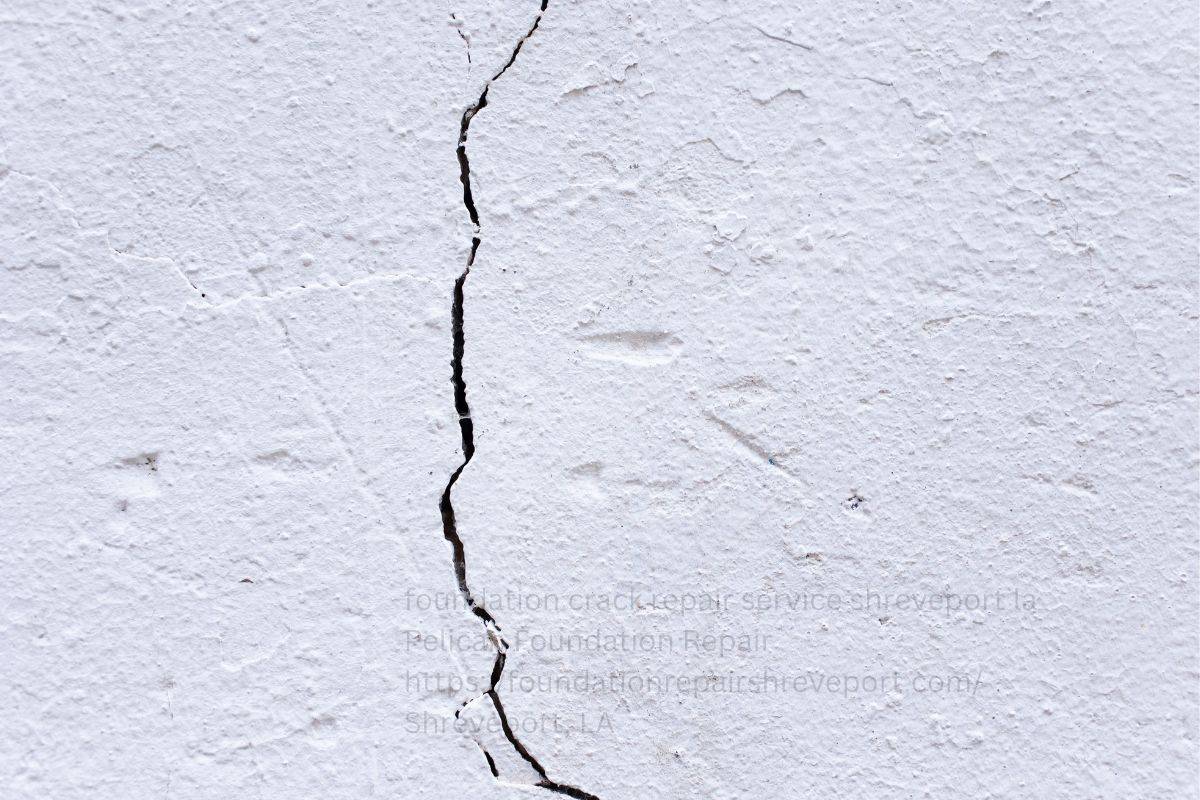
3. Cracks in drywall, especially at openings. Look at door and window corners for diagonal cracks running outward — the textbook settlement crack. Also check where walls meet ceilings. Mark each crack’s end with a pencil line and the date; growth past the line means it is active.
4. Sloping or bouncy floors. Set the marble in the middle of each room and watch where it rolls — a consistent direction reveals the slope. Walk slowly, feeling for soft or springy spots that can mean weakened joists. A slope you can feel underfoot deserves professional measurement.
5. Gaps in trim and cabinetry. Look where baseboards meet the floor, crown molding meets the ceiling, and cabinets meet the wall. Fresh gaps — especially ones that fit a coin — mean something shifted. Cabinets pulling from the wall are a particularly common tell.
Call (318) 585-2003 – Free Inspection
The Exterior Check: 4 Signs in 8 Minutes
Now walk the perimeter slowly, the way a home inspector would. In brick-heavy neighborhoods like Highland, Broadmoor, and Shreve City, the brickwork is your best early-warning system.
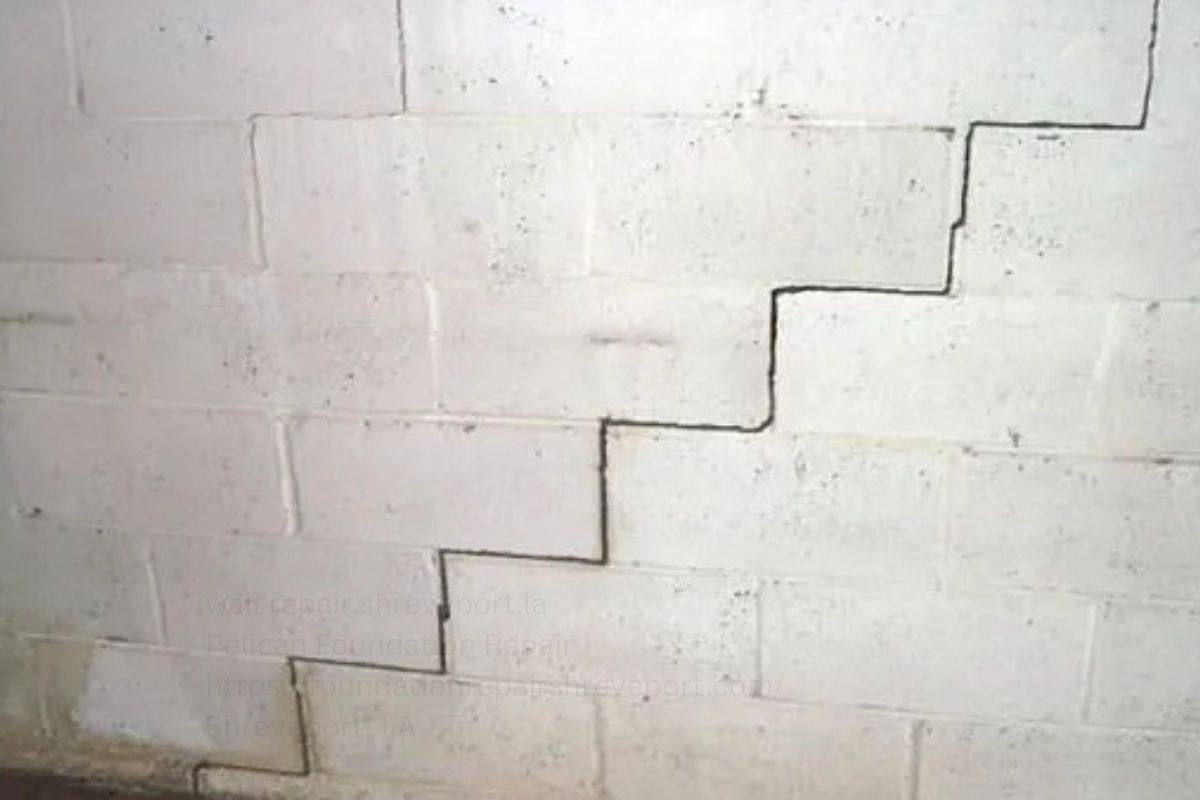
6. Brick cracks — especially stair-step patterns. Look for cracks zigzagging through mortar joints in a staircase pattern — the single most reliable visible sign of settlement, tracing where one foundation section dropped. Vertical hairline cracks are usually just shrinkage. Any crack that fits a dime edgewise deserves documentation and a professional opinion.
7. Gaps around windows, doors, and the foundation line. Check for separation where brick or siding meets window and door frames, and along the top of the foundation wall for gaps between foundation and framing. Also note where soil has pulled away from the foundation — in our clay, that gap means the ground shrank in a dry spell, which is when settlement happens. The U.S. Geological Survey tracks expansive soils nationwide at usgs.gov, and northwest Louisiana sits in one of the country’s notable clay-shrink zones.
8. Grading and drainage problems. Ground should slope away from the house — about 6 inches of drop in the first 10 feet. Look for ponding low spots, mulch built above the foundation line, and downspouts dumping at the wall instead of 4 to 6 feet away. In Louisiana downpours, bad grading is a foundation problem in slow motion.
9. The slab edge and driveway joints. Where driveway or patio meets the house, look for one side sitting lower or a gap opening against the foundation, plus new driveway cracks wider than a quarter inch. Settling flatwork often shares the same soil cause — and directs water toward the foundation.
What Your Findings Mean: Watch, Fix, or Call Now
Finding something does not automatically mean you need foundation repair. Use this table to sort findings — and when in doubt, a free professional inspection settles the question.
| What you found | Likely meaning | What to do |
|---|---|---|
| One hairline drywall crack, not growing | Normal seasonal movement | Photograph, recheck in 3 months |
| A door that rubs slightly | Minor shift or humidity swelling | Watch; check again in dry season |
| Stair-step crack in brick mortar | Differential settlement | Call for a professional inspection |
| Multiple doors sticking on one side | One side of home dropping | Call for a professional inspection |
| Floor slope you can feel walking | Significant settlement or joist issue | Call for a professional inspection |
| Water pooling against foundation | Drainage problem feeding settlement | Fix grading and gutters promptly |
| Crack wider than a quarter inch | Active structural movement | Call promptly; document with photos |
The pattern matters more than any single item. One sticky door in August could be humidity — but three sticky doors plus a stair-step brick crack on the same side is a story pointing at the foundation. Connecting those dots is the real skill. Our guide on when to get a foundation inspection covers timing in more depth.
Call (318) 585-2003 – Free Inspection
How to Document Everything Like a Pro
Good documentation turns your check into something a contractor can use — and protects you if you sell. For each finding, take three photos: a close-up, one from a few feet back, and a wide shot showing the room or wall. Enable timestamp if you can.
Measure crack widths with the tape in the photo. For floors, note which rooms the marble rolled in and how fast. Date cracks on painter’s tape with a pencil mark at each end, so growth is unmistakable next time.
Keep it in one dated phone album, and set a reminder to repeat the walkthrough in three months — ideally a different season, since clay moves most between wet spring and dry late summer. Two dated photo sets prove change better than memory.
What a Professional Inspection Adds That You Cannot Do
A DIY check is a screening tool, not a diagnosis. A professional inspection adds a precision elevation survey measuring every corner to a fraction of an inch — the map a repair plan is built on, and something no marble or phone app can produce.
A pro also gets under the house, where the real evidence lives: pier and beam condition, wood moisture readings, soil around the footings. They distinguish cosmetic settlement from structural movement — and can tell you when nothing needs doing. “Your foundation is fine; fix your gutters” is sometimes the honest answer.
If your DIY check turned up anything in the “call” column of the table above, the next step is simple and free. Our foundation inspection service includes the full elevation survey with photos, and our explainer on what a foundation inspection involves tells you exactly what to expect when we show up.
Mistakes That Trip Up DIY Inspectors
Most DIY checks fail in the same few ways. Avoid these and your 15 minutes will be far more useful.
- Checking once and never again. One snapshot cannot show movement — the value is in the comparison, so do the three-month recheck.
- Only looking at the scary crack. Walk the whole house every time — the pattern of smaller symptoms matters more than one dramatic crack.
- Confusing humidity with settlement. In Louisiana summers, wood swells and sticks from humidity alone. If it clears in drier months, it was the air — but note it anyway.
- Ignoring the outside. Grading, gutters, and downspouts cause a huge share of foundation trouble here — the exterior 8 minutes prevent more damage than the interior 7.
- Waiting a year on a clear pattern. Settlement does not reverse itself, and in expansive clay it usually accelerates. A free inspection early beats a repair late.
Call (318) 585-2003 – Free Inspection
Frequently Asked Questions
How can I check my foundation myself without any tools?
Use your eyes, doors, and a marble: open and close every door and window, look for diagonal cracks at opening corners, roll a marble across floors to find slopes, and photograph anything suspicious.
What are the first signs of foundation problems in a house?
Usually doors that stick or will not latch, diagonal cracks above door and window frames, stair-step brick cracks, and sloping or bouncy floors. In Shreveport these often appear or worsen in dry spells when clay shrinks.
How do I know if a foundation crack is serious?
Width, direction, and growth tell the story. Stable hairline vertical cracks are usually shrinkage; diagonal, stair-step, or horizontal cracks, anything wider than a quarter inch, or anything growing, deserves a professional look.
Can I use my phone to check if my floor is level?
For a rough check, yes — most phone level apps confirm a noticeable slope. It will not replace a professional elevation survey, but it is fine for deciding whether a slope deserves a closer look.
How often should I inspect my own foundation?
Twice a year works in northwest Louisiana — after the wet spring and after the dry summer, when clay moves most. Add a check after unusually heavy rain or extended drought.
Will a home inspector catch foundation problems when I buy a house?
A general inspector flags visible symptoms but does not perform elevation surveys. If the report mentions cracks, sticking doors, or sloping floors, get a dedicated foundation inspection with real measurements before closing — often free.
When should I stop DIYing and call a foundation company?
Call for stair-step brick cracks, multiple sticking doors on one side, a slope you can feel underfoot, any crack wider than a quarter inch, or anything that has grown since your last check.
Call (318) 585-2003 – Free Inspection
Get a Free Professional Inspection in Shreveport
Your 15-minute DIY check is the perfect first step — and if it turned up anything, the next step is free too. Our professional inspection adds the elevation survey, under-house evaluation, and moisture readings your marble cannot provide, with photos and a written assessment.
Call Pelican Foundation Repair at (318) 585-2003, or visit Pelican Foundation Repair to schedule. We inspect foundations across Shreveport, Bossier City, and the surrounding parishes — see our service area list and our full foundation repair services.
Pelican Foundation Repair 6118 Fairfield Ave, Shreveport, LA 71106, USA 318-585-2003 https://foundationrepairshreveport.com/