 Skip to main content
Louisiana Clay Soil and Foundation Damage: What Homeowners Must Know
Louisiana clay soil damages foundations through a shrink-swell cycle: the clay absorbs water and expands when wet, then shrinks and cracks when dry. That constant movement lifts, drops, and squeezes foundations season after season. In the Shreveport area, expansive clay is the number one cause of foundation settlement, slab cracks, bowing walls, and sticking doors. The damage is preventable with proper drainage and moisture control, and repairable with piers, leveling, and wall stabilization.
You cannot change the soil under your home, but you can change how much water reaches it. Homes with good drainage, consistent soil moisture, and no plumbing leaks suffer far less clay-related damage than identical homes without those protections. Everything below explains how the cycle works, what it does to your house, and what actually stops it.
Call (318) 585-2003 – Free Inspection
📊 Clay Soil and Foundations at a Glance
#1 cause
Expansive clay is the top driver of foundation damage in northwest Louisiana
Wet & dry
The shrink-swell cycle repeats every rainy season and every drought
Drainage
The single most effective defense against clay soil damage
What Makes Clay Soil “Expansive”
All soil moves a little with moisture changes. Expansive clay moves a lot. The clay minerals common in Louisiana — particularly montmorillonite-type clays — have a layered molecular structure that traps water molecules between the layers. When water is available, the layers spread apart and the soil volume grows. When water leaves, the layers collapse and the soil shrinks.
The volume change is not subtle. Highly expansive clay can swell 10 percent or more by volume, which translates to inches of ground movement under and around your foundation. Sandy or loamy soils barely move at all by comparison. That difference is why two houses on the same street can have completely different foundation histories: it often comes down to what is in the ground beneath each one.
The Shrink-Swell Cycle, Season by Season
In the Shreveport area, the cycle follows our weather. Spring brings heavy rain, and the clay around your foundation saturates and swells. That swelling pushes up on slabs (called heave) and pushes sideways against basement and foundation walls (lateral pressure). Summer brings heat and dry spells, and the clay shrinks, pulling away from the foundation and leaving voids. Fall and winter rains start the swelling again.
Each cycle does a little damage. Here is how it accumulates:
- Wet season: swollen clay heaves slabs upward, cracks concrete, and shoves walls inward
- Dry season: shrunken clay leaves gaps under footings and slabs, removing support so sections settle downward
- Repeat: the foundation never returns to exactly where it started; each cycle adds a little permanent displacement
- Result after years: differential settlement — different parts of the house at different heights — which is what cracks walls, racks door frames, and slopes floors
The cruelest part is that the damage is cumulative but invisible for a long time. By the time cracks show inside, the soil has usually been moving the foundation for years.
Why Shreveport-Area Homes Are Especially Exposed
Northwest Louisiana sits on deep deposits of expansive clay, part of the Gulf Coastal Plain geology. Unlike parts of the country where clay is a thin surface layer over rock, our clay goes deep — which is exactly why steel push piers here often drive 20 to 30 feet before finding stable bearing soil. The problem is not shallow, so shallow fixes do not solve it.
Our rainfall pattern makes it worse. Long soaking rains saturate the clay thoroughly, and then hot dry stretches bake it. That extreme wet-dry swing is harder on foundations than a climate that stays consistently damp or consistently dry. Add in the mature trees common in established Shreveport neighborhoods — big oaks and pines that pull enormous amounts of water from the soil — and you get uneven moisture that moves one side of a house while the other side stays put.
Call (318) 585-2003 – Free Inspection
Signs Clay Soil Is Damaging Your Foundation
Clay damage has a recognizable signature. If you see several of these together, expansive soil is the likely culprit:
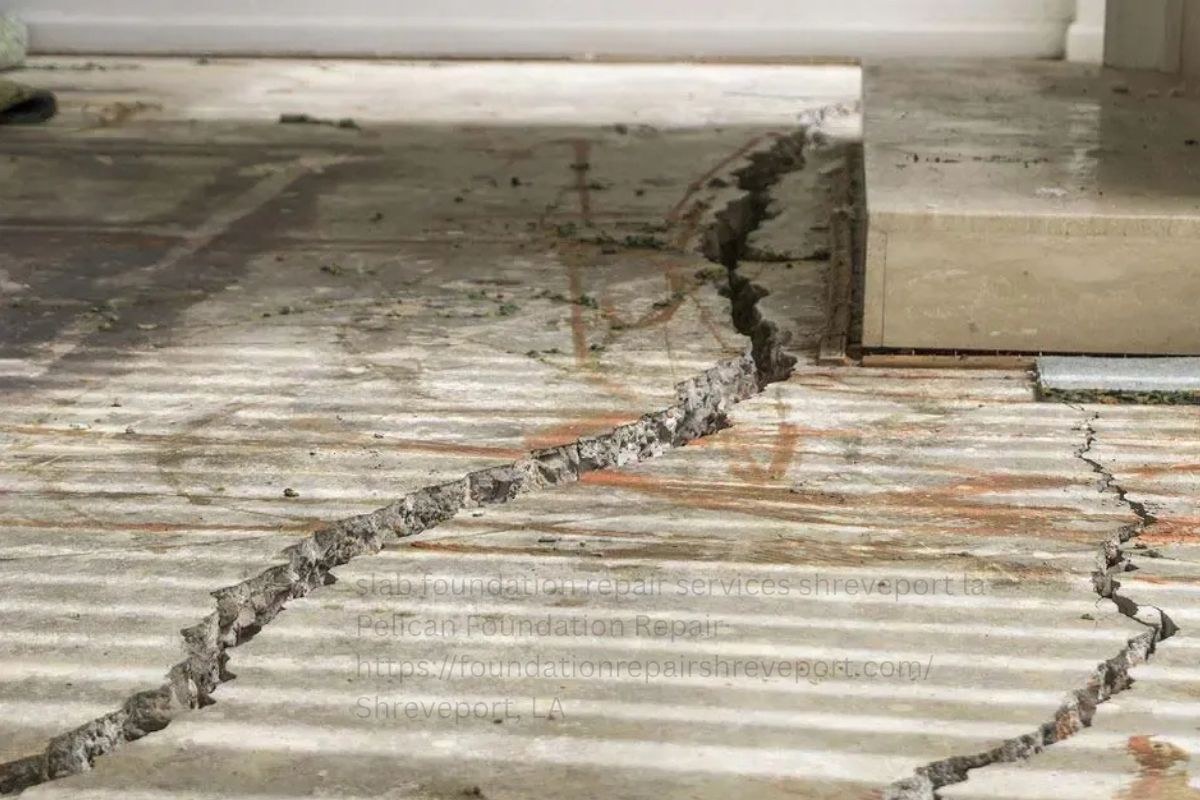
- Cracks in brick veneer, especially stair-step patterns following mortar joints
- Doors and windows that stick in summer and free up in winter (or the reverse) — the seasonal pattern is the clay giveaway
- Gaps between the soil and the foundation visible during dry months, showing the clay has pulled away
- Slab cracks with one side higher than the other
- Chimneys leaning or separating from the house
- Foundation walls bowing inward, as described in our bowing wall repair guide
- Patios, driveways, or walkways that have lifted, dropped, or tilted
The seasonal sticking pattern deserves emphasis because homeowners misread it constantly. “The door only sticks in August” sounds like a humidity problem with the door. It is actually the foundation moving with the soil — and it means the movement is active, not historical.
What Clay Does to Each Foundation Type
Different foundations fail differently in clay soil. Knowing your type tells you what to watch for.
| Foundation type | How clay attacks it | Typical repair |
|---|---|---|
| Slab on grade | Heave lifts sections; shrinkage voids let sections drop; differential movement cracks the slab | Steel push piers to stabilize and lift |
| Pier and beam | Clay movement shifts individual piers; moisture rots wood beams and joists | Pier re-leveling and replacement; moisture control in the crawl space |
| Basement / foundation walls | Lateral pressure bows walls inward; hydrostatic pressure drives water through cracks | Wall anchors, carbon fiber, or steel beams; exterior drainage |
| Crawl space | Standing water and humidity from clay holding moisture against the structure | Crawl space encapsulation plus drainage |
Drainage: Your Best Defense
If you take one thing from this article, take this: controlling water around your foundation matters more than anything else you can do about clay soil. You cannot replace the clay, but you can keep it from swinging between soaked and parched, and that alone prevents most of the damage.
The essentials are unglamorous but effective:
- Gutters and downspouts that actually work, with extensions carrying water at least six feet from the house
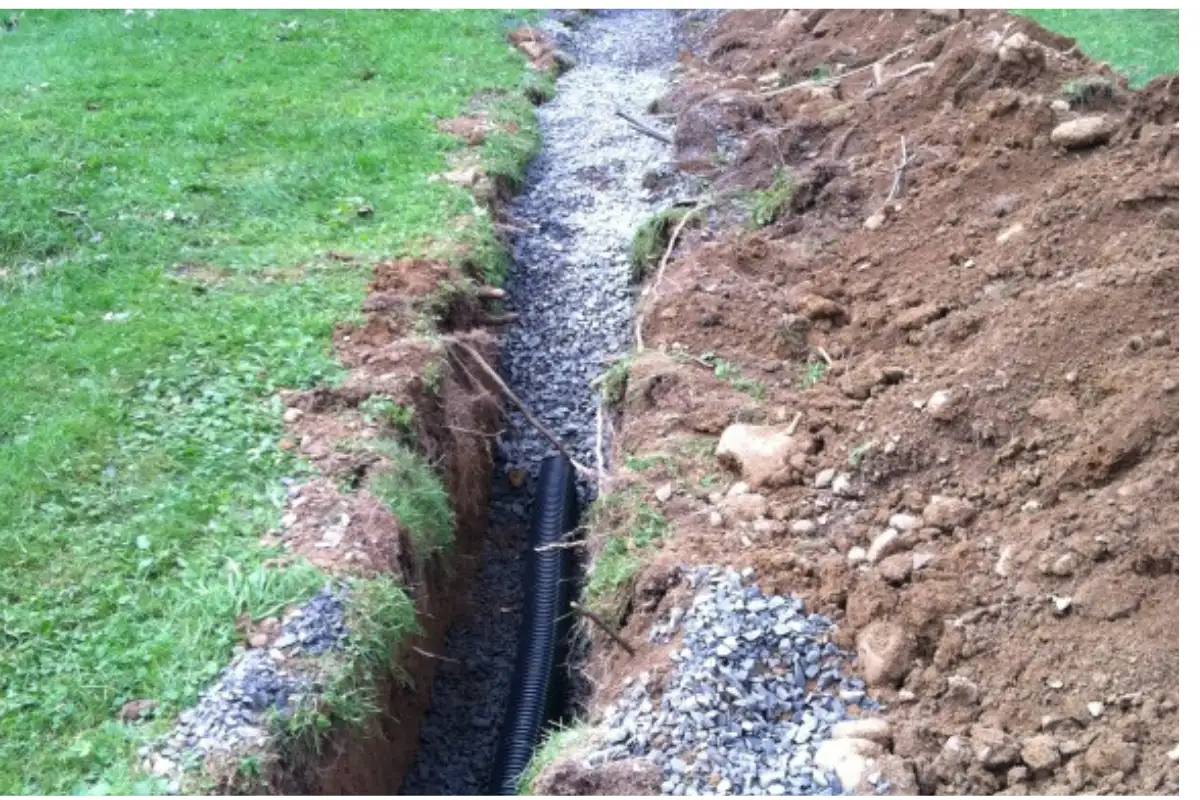
- Grading that slopes away from the foundation in every direction — no low spots where water ponds against the wall
- No flower beds piled against the foundation acting as water reservoirs; keep planting beds graded away and mulched lightly
- French drains or surface drains where the lot naturally collects water
- Consistent moisture in drought: soaker hoses run in dry spells keep clay from shrinking violently away from the foundation
That last point surprises people. Watering your foundation in a drought sounds wrong, but for expansive clay it is standard practice: the goal is steady moisture, not alternating flood and drought. Our drainage correction service designs the full water-management plan for your lot, not just one piece of it.
Trees, Plumbing Leaks, and Other Moisture Thieves
Drainage is the big lever, but two other moisture sources cause outsized clay damage. The first is trees. A mature oak can pull hundreds of gallons of water from the soil per day in summer, drying the clay on one side of your house while the other side stays moist. That differential drying is a classic cause of one-corner settlement. The fix is not necessarily removing the tree — root barriers and targeted watering often manage it — but large trees within 20 feet of the foundation deserve attention in the moisture plan.
The second is plumbing leaks. A slow leak under a slab or in a crawl space feeds constant moisture to the clay in one spot, creating a permanent wet zone that heaves while everything else stays normal. If one area of your home shows damage far worse than the rest, a leak check is worth doing before any structural repair. Fix the leak first, then fix the foundation — in that order.
Call (318) 585-2003 – Free Inspection
Repairing Damage Clay Already Caused
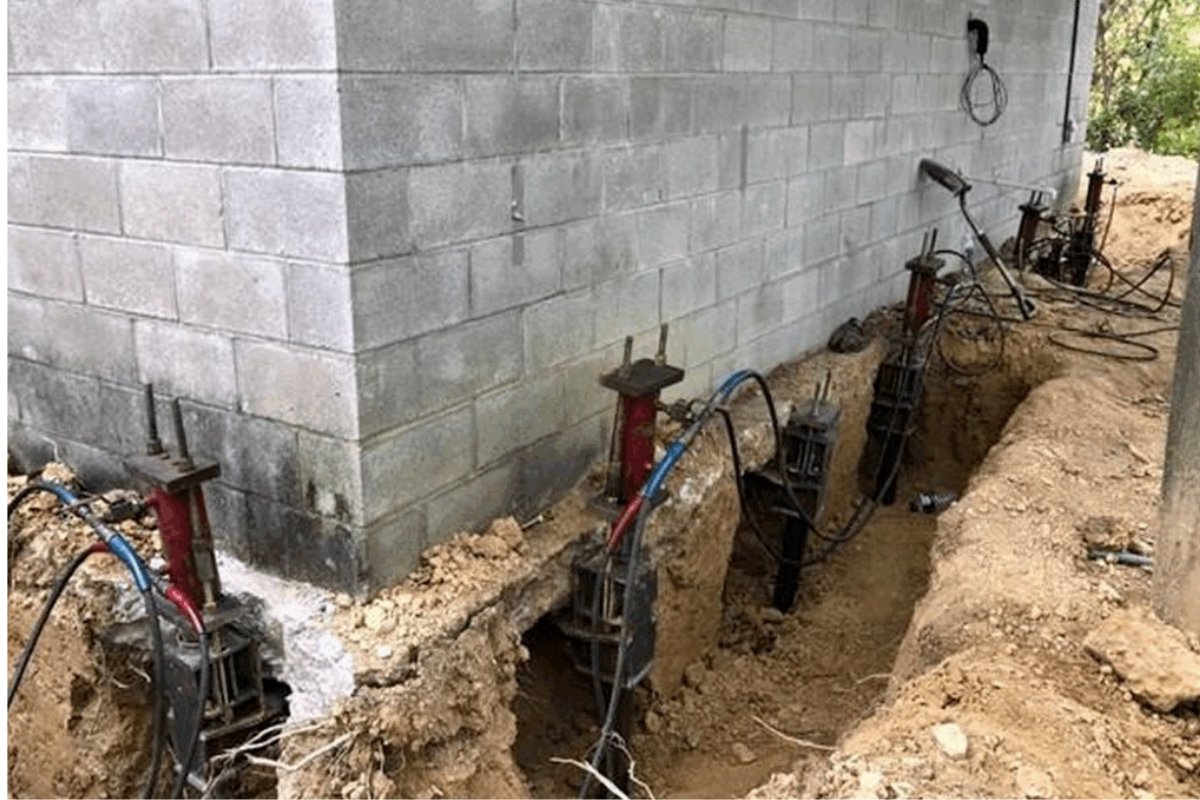
Prevention is ideal, but most homeowners reading this already have damage. The repair depends on what moved and how far. Settled slabs and perimeters get steel push piers driven to stable soil. Bowing walls get anchors, beams, or carbon fiber. Cracked but stable foundations get epoxy or polyurethane crack repair ($400–$1,500). Sagging pier-and-beam homes get re-leveling.
The non-negotiable rule: repair the structure and the moisture problem together. Piers without drainage correction leave the clay free to keep attacking. Drainage without piers leaves a settled foundation sitting crooked. The combination is what lasts, and it is how we scope every job. Our underpinning guide explains the pier process in detail.
New Construction on Clay: What to Get Right
Building new or adding on? Clay soil rewards good prep and punishes shortcuts. Post-tension slabs, deeper footings, proper site drainage installed before the foundation goes in, and granular backfill instead of clay against the walls all dramatically reduce future problems. A geotechnical soil report before building is cheap insurance — it tells the engineer exactly what the clay on your lot will do.
If you are buying an existing home in Caddo or Bossier Parish, a foundation inspection before closing is equally cheap insurance. Clay damage that is already underway will show up in elevation readings even when cracks are still small. Our inspections are free for homeowners, and for buyers they are the best few hundred dollars of diligence you can spend — actually zero dollars with us.
Frequently Asked Questions
Can clay soil really lift a concrete slab?
Yes. Expansive clay generates uplift pressures far greater than the weight of a residential slab. Swelling clay routinely heaves slabs, patios, and driveways by inches. This is well documented by geotechnical engineers — the USGS expansive soils resource describes the mechanism and the scale of damage nationally.
How do I know if my soil is expansive clay?
The field signs: soil that cracks deeply in dry weather, becomes sticky and plastic when wet, and shows the seasonal foundation symptoms described above. A geotechnical engineer can test it definitively with an Atterberg limits test, but for most homeowners the symptom pattern plus local knowledge is enough to act on.
Will watering my foundation in summer really help?
Yes, when done correctly. The goal is consistent soil moisture, not soaking. Soaker hoses placed 12–18 inches from the foundation, run on a timer during dry spells, keep the clay from shrinking away and leaving voids. It is a maintenance practice, not a repair — it prevents damage rather than fixing existing settlement.
Do I need piers, or will drainage alone fix my foundation?
Drainage prevents future movement but cannot lift a foundation that has already settled. If elevation readings show real, permanent drop, piers are needed to stabilize and lift. If readings are stable and symptoms are purely seasonal, drainage and moisture control may be the complete answer. The measurements decide.
Are some Shreveport neighborhoods worse for clay than others?
Clay severity varies lot by lot even within neighborhoods, depending on the specific soil deposit, drainage patterns, tree cover, and construction practices when the home was built. There is no neighborhood you can assume is safe — or doomed — without looking at the individual property. We serve Greenwood and all surrounding northwest Louisiana communities, and clay is a factor in every one of them.
How much does clay soil foundation repair cost?
Crack repairs run $400–$1,500. Full pier underpinning jobs run $3,500–$15,000+ depending on pier count and depth. Drainage correction is priced per job based on the lot. Because clay depth and damage vary so much, a free inspection with measurements is the only way to get a real number.
Does foundation damage from clay soil get worse over time?
Almost always. Each wet-dry cycle adds a little permanent displacement, and the damage compounds. A wall bowed half an inch this year is easier and cheaper to stabilize than the same wall at two inches in five years. Early action is the cheapest action with clay soil.
Should I get a soil test before buying a home in Louisiana?
A full geotechnical report is standard for new construction and worthwhile for any buyer who wants maximum certainty. For existing homes, a professional foundation inspection with elevation readings usually tells you what you need to know about how the soil is treating that specific house — and ours is free.
Call (318) 585-2003 – Free Inspection
Take Control of Your Clay Soil Situation
Clay soil is a fact of life in northwest Louisiana, but foundation damage from it is not inevitable. Good drainage, consistent moisture, and prompt attention to early warning signs keep most homes stable for decades. And when damage has already happened, proven repairs — piers, wall stabilization, drainage correction — fix it permanently.
Call Pelican Foundation Repair at (318) 585-2003 for a free inspection. We will measure your foundation, assess your drainage and soil conditions, and give you a written plan — whether that plan is piers, drainage, or simply the reassurance that your home is fine. The LSU AgCenter soil resources are also worth a look for Louisiana-specific soil background.
Pelican Foundation Repair 6118 Fairfield Ave, Shreveport, LA 71106, USA 318-585-2003 https://foundationrepairshreveport.com/