 Skip to main content

Leveling a Pool Deck: Mudjacking vs Polyurethane Foam in Louisiana
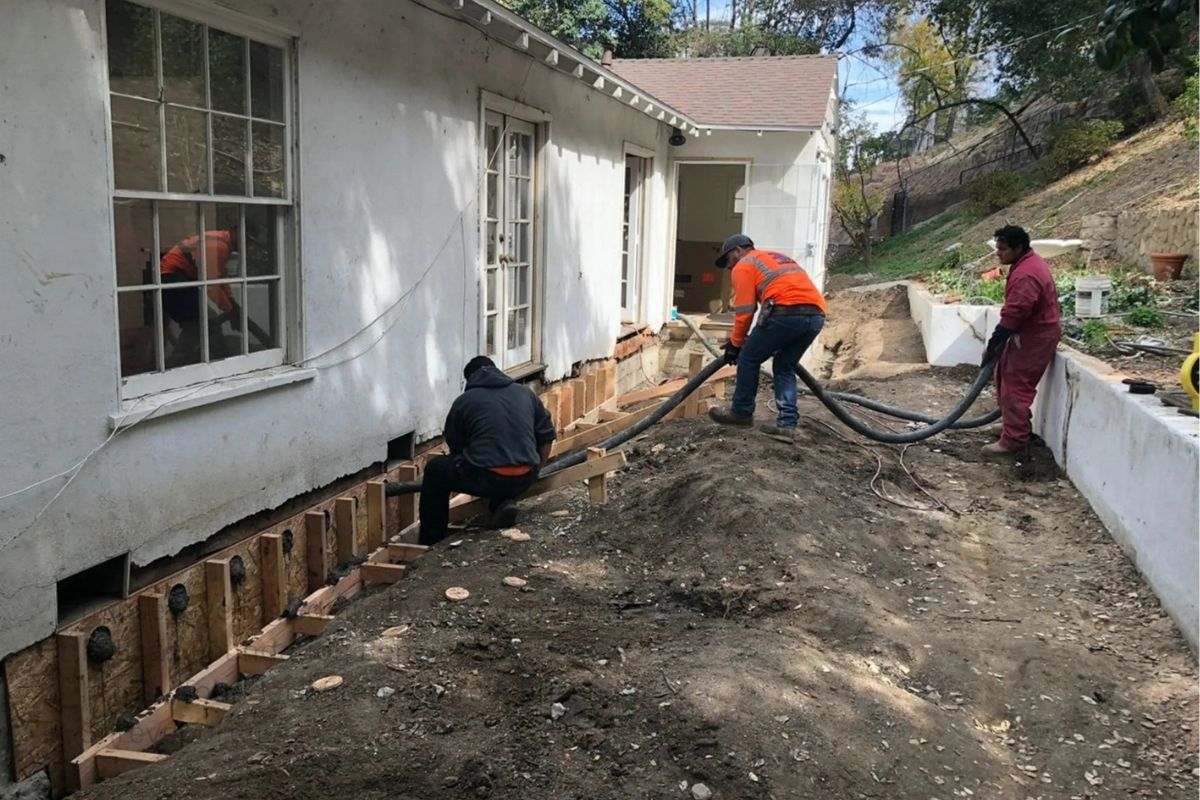
A sinking Louisiana pool deck usually comes from soil washout and backfill settling. Compare mudjacking vs polyurethane foam on cost, cure time, precision, and fit near pool coping.
For most Louisiana pool decks, polyurethane foam wins: it is lighter, more precise around coping and drains, cures in minutes, and will not wash out again. Mudjacking costs less per slab but is heavier, messier, and harder to control in the tight zones where pool decks need it most.
Why Pool Decks Settle in Louisiana
Pool decks do not settle for mysterious reasons. They settle because the ground under them was disturbed and Louisiana weather never lets disturbed ground rest. When your pool was built, the crew dug a big hole, set the shell, and backfilled around it. That backfill — even when compacted properly — is looser than the undisturbed soil around it, and it keeps consolidating for years. Add our pattern of drought-then-deluge: long dry spells shrink the clay, then spring storms and pool splash-out saturate it, and the soil compacts a little more each cycle. Over time, the deck slabs nearest the pool drop, usually unevenly.
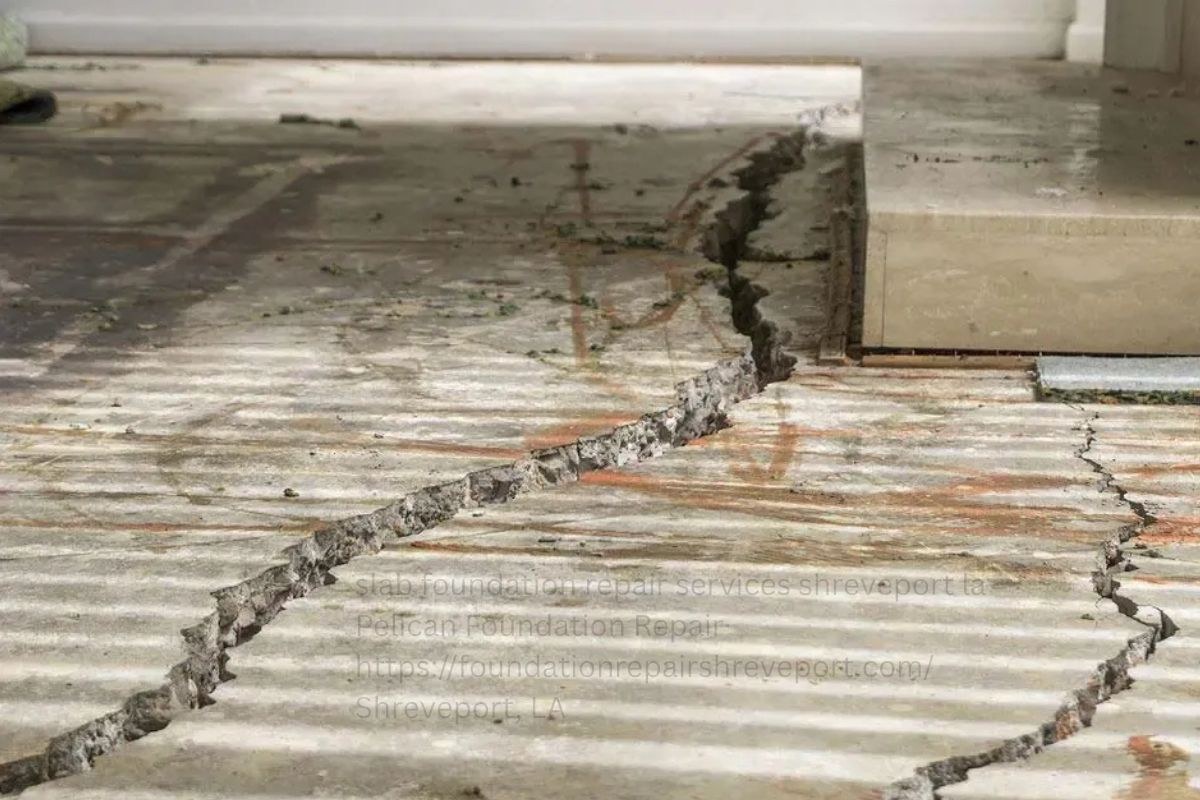
The second culprit is washout. Pool plumbing leaks, leaking skimmers, and splash-out that drains the wrong way all move water under the deck, and moving water carries fine soil with it. Every small leak carves out a little more support until the slab is bridging a void. You will see the classic signs: slabs that rock when you step on them, joints that opened up near the coping, and water ponding on the deck instead of draining away. In neighborhoods around Cross Lake and in 71118 where the water table runs high, washout works even faster. If your deck is tripping guests or sending water toward the pool instead of away from it, the soil underneath has already told you what it thinks of the situation.
Mudjacking vs Polyurethane Foam: How Each Works
Both methods lift settled concrete by filling the voids underneath and raising the slab back to grade. The difference is what gets pumped under there, and that difference matters a lot around a pool.
Mudjacking (Slabjacking)
Mudjacking pumps a heavy slurry of cement, soil, and water through large drilled holes — usually two inches or wider — under the slab. The slurry fills voids and hydraulically lifts the concrete. It has been around for decades, it costs less per square foot than foam, and on big open areas like driveways and parking lots it does solid work. Our driveway concrete leveling guide covers where mudjacking shines. Around a pool, though, the downsides stack up: the slurry is heavy, adding real weight to already-soft backfill; the big drill holes are ugly in decorative pool decking; and the lift is harder to control in small increments near coping, drains, and skimmers.
Polyurethane Foam Injection
Foam injection pumps a two-part polyurethane through small holes — about the size of a dime — that expands under the slab, fills every void, and lifts with precise control. The foam weighs almost nothing compared to mudjacking slurry, so it does not add load to soft pool backfill. It cures in minutes, not days, which means the deck is usable the same day. And because the foam is waterproof once cured, it resists the washout that caused the problem in the first place. The trade-off is price: foam typically costs more per slab than mudjacking. For the tight, visible, drainage-critical work around a pool, most contractors — us included — consider it the better tool. You can read a deeper cost comparison in our mudjacking vs foam cost breakdown.
Head-to-Head: Which One Fits Your Pool Deck
Here is the honest side-by-side so you can match the method to your situation instead of taking a salesperson’s word for it:
| Factor | Mudjacking | Polyurethane Foam |
|---|---|---|
| Material weight | Heavy cement slurry — adds load to soft backfill | Very light — adds almost no load |
| Hole size | Large, around 2 inches — visible in decorative concrete | Small, dime-sized — nearly invisible after patching |
| Lift precision | Coarser control; harder near coping and drains | Fine control; ideal for tight pool-deck zones |
| Cure / use time | Hours to a day before full use | Minutes — walkable the same day |
| Washout resistance | Can erode again if water keeps moving underneath | Waterproof once cured; resists future washout |
| Typical cost | Lower per slab | Higher per slab, but longer-lasting around pools |
The bottom line for pool decks: mudjacking is the budget pick and works fine on the far sections of a big deck where precision does not matter much. Foam is the pick for the slabs that matter most — the ones against the coping, around the skimmers, and anywhere drainage slope has to be exact. Many Shreveport jobs end up as a combination: foam in the critical zones, mudjacking on the outer slabs, which keeps the total reasonable. Our concrete leveling services page explains how we scope mixed-method jobs like these.
Foam is usually the clear winner when:
- The slabs sit right against the coping, tile, or a screen enclosure where big drill holes would show.
- The backfill around the pool is soft or sandy and cannot take the extra weight of cement slurry.
- You need the deck back in service the same day — foam cures in minutes, not hours.
- Washout caused the settlement, since cured foam will not erode if water moves under the slab again.
- The lift has to be exact, like restoring drainage slope so water runs away from the pool.
The Problem Areas Pros Look For First
When we walk a pool deck for an estimate, we check the same trouble spots every time, because pool decks fail in predictable places:
- The coping joint: the seam where the deck meets the pool edge. If it has opened up or the deck dropped away from the coping, water is getting underneath — and the void is usually right there.
- Around skimmers and returns: plumbing penetrations are the classic leak points. Damp soil or sinking right at a skimmer almost always means a plumbing leak feeding washout.
- Drainage slope: a healthy deck sheds water away from the pool. If water ponds or runs toward the pool, the slope has reversed and every rain is pouring water under the slabs.
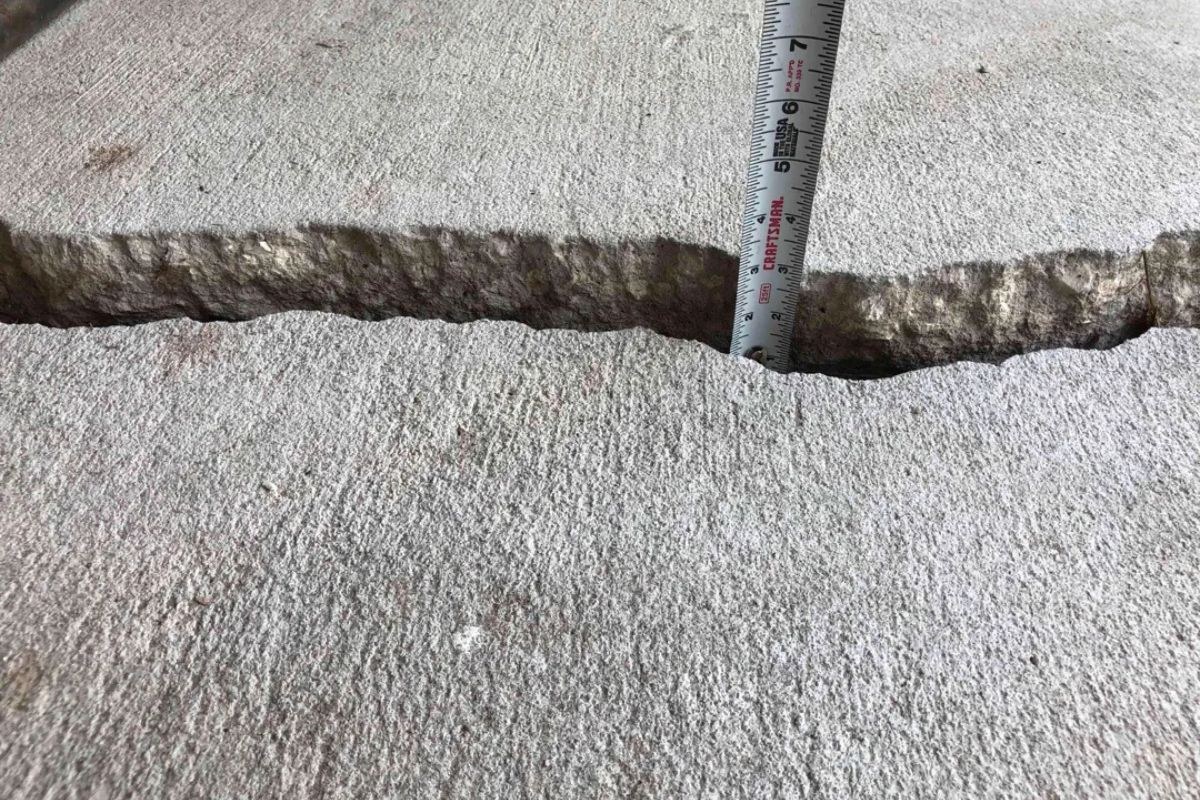
- Trip hazards at joints: any lip over a quarter inch between slabs is both a safety problem and proof of differential settlement — one slab dropped while its neighbor did not.
- Hollow sounds: tapping the slab with a rod or even a broom handle reveals voids. A solid thunk means support; a hollow drum sound means the slab is bridging air.
- Staining and efflorescence: white mineral deposits or rust-colored stains on the deck surface often mark where water is moving through or under the concrete.
If the inspection finds a plumbing leak, fix the leak before or alongside the leveling — lifting a deck over an active leak just buys you a repeat visit. And if the whole yard drains toward the pool, no amount of foam fixes the real problem until the grading gets corrected. Leveling solves the symptom; drainage solves the cause.
What the Repair Day Looks Like and How to Keep It Level
A foam leveling job on a residential pool deck usually takes a few hours. The crew drills the small injection holes in a grid pattern, pumps foam section by section while watching the lift with gauges, patches the holes, and cleans up. You can walk on the deck the same day and swim the next. Mudjacking takes longer — bigger equipment, bigger holes, and a cure wait before the deck sees traffic. Either way, a good crew protects the pool itself, keeps slurry and foam out of the water, and leaves the coping and tile untouched.
Keeping it level afterward is about water management. Make sure splash-out and rain drain away from the deck, not under it. Keep the coping joint sealed with a flexible sealant so surface water cannot dive straight into the backfill. Fix plumbing leaks the week you find them, not the season after. And after our big spring storms, walk the deck and look for new ponding — catching a reversed slope early means a small touch-up instead of another full lift. The EPA and FEMA both publish homeowner guidance on managing water around structures, and the principles apply directly to pool decks: control where water goes and the ground stays put. See our full concrete leveling and foundation services, or start from the Pelican Foundation Repair homepage.
Frequently Asked Questions
How much does it cost to level a pool deck in Louisiana?
Foam injection for a residential pool deck typically runs in the low to mid thousands depending on how many slabs have settled and how far they dropped. Mudjacking usually costs less for the same area. Severe washout that needs void filling first adds to either method. Because every deck settles differently, a free on-site elevation check gives you a real number instead of a guess.
Can you level a pool deck without damaging the coping?
Yes — this is exactly where foam earns its keep. The small injection holes stay well back from the coping, and the controlled lift raises the deck toward the coping without pushing against it. An experienced crew lifts in small increments while watching the joint. Mudjacking near coping is riskier because the heavier slurry and coarser lift are harder to finesse in tight quarters.
How long does pool deck leveling last?
When the underlying cause is fixed, a foam lift lasts for many years — the cured foam does not wash out, compress, or absorb water. Mudjacking lasts well too, as long as water stops moving under the slab. What shortens the life of either method is an unrepaired plumbing leak or bad drainage. Fix the water, and the lift holds; ignore the water, and you will be lifting again.
Do I need to drain my pool before leveling the deck?
No. Leveling works on the deck slabs around the pool, not the pool shell itself, so the water stays put. The crew takes precautions to keep equipment, slurry, and foam out of the pool, and you can swim again quickly — usually the next day with foam. If the pool shell itself has shifted or cracked, that is a separate structural issue, not a deck leveling job.
Why is water pooling on my pool deck after it rains?
Ponding means the slabs have settled unevenly and the drainage slope is gone — or reversed, so water now flows toward the pool instead of away. It is one of the clearest signs the deck needs leveling. Beyond being slippery and ugly, standing water seeps into joints and feeds the washout underneath, so ponding tends to get worse, not better, if you leave it alone.
Is a sinking pool deck dangerous or just ugly?
Both. Raised slab edges are genuine trip hazards, especially around a pool where people are barefoot, wet, and often kids. Sunken areas that pond water get slippery with algae fast in our climate. And structurally, every season of washout removes more soil support, which turns a simple lift into a bigger void-filling job. The safety issue alone is reason enough not to wait.
Can I just replace the settled slabs instead of leveling them?
You can, but replacement usually costs several times more than leveling, takes days instead of hours, and does nothing about the soft soil underneath — the new slabs can settle just like the old ones. Replacement makes sense when slabs are badly cracked or shattered. For slabs that are intact but sunken, lifting them back to grade with foam is faster, cheaper, and addresses the voids below.
Pelican Foundation Repair
6118 Fairfield Ave, Shreveport, LA 71106, USA
318-585-2003
https://foundationrepairshreveport.com/