Pool Deck vs Driveway Leveling: What’s Different and What It Costs
A pool deck and a driveway can both sink, but they level differently. Here is how each method works, what each job costs, and when leveling is the right call.
Pool deck leveling vs driveway leveling comes down to load and access. A pool deck carries foot traffic and pool water, so crews often use light foam and work around coping and drains. A driveway carries cars and trucks, so it needs a stronger lift and a thicker base. Both use mudjacking or foam, and both cost less than replacement.
If you live in Shreveport, you have probably seen both problems on the same street. A pool deck dips near the deep end, so water stands where the kids walk barefoot. A driveway drops a couple of inches at the garage, so every car bumps over the lip. Both are usually caused by the same thing: the expansive clay soil under Shreveport shifts with wet and dry weather.
How Pool Deck Leveling Works
A pool deck is a set of concrete slabs poured around a swimming pool. It sinks for the same reasons any slab sinks in Shreveport: the clay soil under it dries and shrinks in a hot spell, then swells when the rain comes back. Pool water also splashes over the edge each day and seeps under the slabs through joints and cracks.
Leveling starts with small holes drilled through the slab, about the size of a dime for foam injection or a little larger for mudjacking. A crew pumps material under the slab through those holes until it rises back to level. With mudjacking, the material is a slurry of sand, cement, and water. With foam, it is a two-part foam that expands as it cures and lifts the slab.
Foam is often the first choice around a pool. It is light, so it adds very little weight to soil already soft from pool water. It cures fast, often in under an hour, so the deck can be walked on the same day. And it needs smaller holes, which matters where every hole shows under bare feet.
How Driveway Leveling Works
A driveway is leveled the same basic way as a pool deck, but the job is built for weight. The crew drills holes and pumps mudjacking slurry or foam underneath until the slab rises back to grade. The method looks the same from the street, but a driveway carries cars and trucks every day for years.
Mudjacking is common on driveways, and cost is a big reason. It runs about per square foot, and it is a proven way to lift a heavy slab. The slurry is dense and strong once it cures, and it fills large voids well, which matters on an older driveway in Broadmoor or South Highlands. Foam costs more, but it cures faster, often in less than an hour, so a family can park on the driveway the same day.
The crew also has to think about thickness. A driveway slab is usually thicker than a pool deck slab, and it often has steel mesh or rebar inside it. That extra thickness and steel help the slab spread the weight of a car across the lift material below it.
The Load Difference: Feet and Water vs Cars and Trucks
The biggest difference in pool deck leveling vs driveway leveling is what each surface has to carry. A pool deck carries people walking barefoot, patio chairs, a grill, and splashed pool water. None of that is heavy. A driveway carries cars every day, and trucks on moving day, trash day, and delivery day.
That weight difference changes three things: the material, the lift, and how long the fix lasts. Foam is light and strong, so it works well under a pool deck without adding weight to soft, wet soil. Under a driveway, the crew may use a denser foam or more mudjacking slurry to build a base that holds up under tires. A pool deck can be lifted a few inches without much risk, because the slab is thin and light. Our concrete leveling page covers both kinds of jobs, and our post on concrete leveling cost in Shreveport breaks down the price ranges in more detail.
- A pool deck carries foot traffic and splashed pool water, so a light foam lift is often enough.
- A driveway carries cars and trucks every day, so the lift material must be stronger.
- Mudjacking costs less per square foot and fills large voids well.
- A thick driveway slab must be lifted slowly and evenly, or it can crack under its own weight.
- Both jobs last longer when the water problem behind the settling is fixed first.
Pool Edges: Coping, Drains, and Water
The hardest part of leveling a pool deck is not the lifting. It is everything around the pool. The coping stones, the skimmer, the deck drains, and the pool itself all sit close to the work, and a careless crew can damage them.
Coping is the first concern. Coping is the row of stones that caps the pool wall and meets the deck, and it sets the height everything else must match. If a deck slab has sunk below the coping, the crew lifts it until it meets the coping edge cleanly, with no lip to trip on. If the coping itself has shifted, the crew must say so, because leveling the deck will not fix it. Drains are the second concern: they carry splash water away, and they must keep working after the lift.
Water is the third concern, and it is the one homeowners forget. The pool usually stays full during leveling, but the crew must keep pump hoses, slurry, and foam away from the water. A splash of slurry in a pool means a cleanup job and a chemistry rebalance. Foam is easier to keep clean because it expands in place under the slab. Access matters too: the crew needs a path for truck and hoses, and in tight backyards in ZIP codes 71106 and 71105, that path can be narrow. For more on pool decks, see our post on pool deck concrete leveling.
Driveway Edges: Garage, Sidewalk, and Street
A driveway has its own edge problems, and they are all about transitions. A driveway meets the garage floor, the sidewalk, and the street. When one slab sinks, every transition turns into a lip, a trip hazard, or a spot where water pools.
The garage is the most common trouble spot. A slab that has dropped an inch or two at the garage door leaves a lip every tire bumps over, and rain runs into the garage instead of out to the street. The crew lifts the slab until it meets the garage floor evenly, then checks that water runs away from the garage, not toward it.
Drainage ties all three transitions together. A driveway that slopes toward the house will push water into the garage and against the foundation, and no amount of leveling fixes that if the slope is wrong. The crew should check the slope from the garage to the street after the lift. In Bossier City and Shreveport, a driveway that keeps settling usually has a water problem behind it. Our concrete driveway repair page covers the full range of driveway fixes.
When Leveling Works and When Replacement Is the Honest Answer
Leveling is a good fix for a slab that has sunk but is still in one piece. If your pool deck or driveway has dropped an inch or two, the concrete is mostly sound, and the joints are still in fair shape, leveling can bring it back to grade for far less than replacement. The slab does not need to be new. It needs to be solid enough to lift without breaking apart. Leveling is not the right answer when the concrete itself is failing.
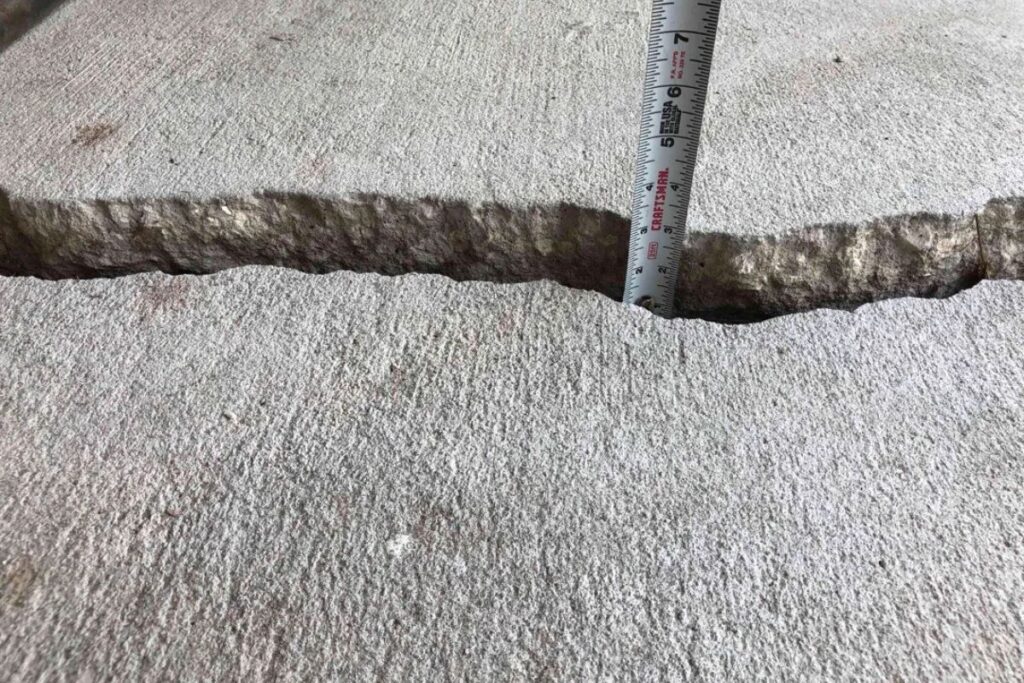
There are a few clear signs that point toward replacement. If the concrete is spalling, which means the surface is flaking and peeling away in layers, the slab is wearing out from the top down. If a crack is wider than a half inch and runs across the whole slab, the slab has likely lost its strength. If the slab rocks when you step on a corner, it is broken underneath, not just settled. When in doubt, get a expert inspection before you spend money on either fix. The team at Pelican Foundation Repair offers expert inspections and a 20-year structural warranty on qualifying repairs.
- Leveling works when a slab has sunk but is still mostly in one solid piece.
- Replace a slab that is cracked into many moving pieces.
- Surface flaking, cracks wider than a half inch, and rocking corners all point toward replacement.
- A slab leveled before that sunk again may have a soil or water problem underneath.
- Coping pulling away from a pool wall can mean the pool shell has moved, not just the deck.
What Drives the Cost of Each Job
Concrete leveling in Shreveport usually runs per square foot, and most residential jobs land between . Homes near Cross Lake and the Red River in ZIP code 71115 deal with the same clay soil. That range covers both pool decks and driveways. A small deck needing a light foam lift can cost less than a large driveway needing a lot of slurry.
The method matters too. Mudjacking runs about per square foot, near the low end of the range. Foam costs more, but it cures faster, often in under an hour, so you can use the surface the same day. For a driveway, the choice is closer: mudjacking saves money, and foam saves time. Our post on mudjacking vs foam compares the two methods in full.
Replacing a driveway can run to , while leveling that same driveway might cost . Pool deck costs vary by size, access, and method, and no single price fits every pool, so a expert inspection is the only way to get a real number for your deck. The Concrete Network has a helpful guide to concrete slab lifting methods, and the Web Soil Survey at websoilsurvey.nrcs.usda.gov can show the clay soil under your address.
| Factor | Pool deck | Driveway |
|---|---|---|
| Typical load | Foot traffic, chairs, and splashed pool water | Cars, trucks, and delivery vans every day |
| Common method | Foam injection, for its light weight and fast cure | Mudjacking is common; foam when a fast cure matters |
| Key edge to match | Coping stones at the pool waterline | Garage floor, sidewalk, and street curb |
| Water concern | Splash water and deck drains | Roof runoff washing soil from under the slab |
| Price range | Varies by size, access, and method; get a expert inspection | Leveling might cost , vs -plus to replace |
| When to replace instead | Coping pulling away from the pool wall | Slab cracked into pieces or flaking away |
Frequently Asked Questions
Is pool deck leveling the same as driveway leveling?
Not quite. Both use mudjacking or foam to lift a sunken slab, but a pool deck carries light foot traffic while a driveway carries cars and trucks. Pool work also has to protect the coping, skimmer, and drains.
Which costs more, leveling a pool deck or a driveway?
It depends on size, access, and method more than on which surface it is. Concrete leveling usually runs per square foot, and most residential jobs land between . Pool deck costs vary, so a expert inspection is the best way to get a real number.
Can foam injection lift a driveway that carries trucks?
Yes, when it is done right. Foam is strong once cured, and a crew may use a denser foam or more material under a driveway. The slab must be lifted slowly and evenly, and the base and drainage should be checked first.
Will leveling fix water pooling on my pool deck?
It can, if the slope is fixed as part of the lift. The crew should check the grade after leveling so water runs toward the drains. If the drains themselves are clogged or broken, they need to be fixed too.
How long does concrete leveling last?
A leveled pool deck often stays level for a long time because foot traffic does not press the soil down again. A driveway takes daily vehicle weight, so it can settle sooner if the soil is still soft or the water problem is not fixed.
Can you level a pool deck without draining the pool?
Yes, in most cases the pool stays full. The crew works from the deck side and keeps slurry and foam out of the water and the drains. Draining a pool is rarely needed for deck leveling alone.
When should I replace my driveway instead of leveling it?
Replace it when the slab is cracked into many moving pieces, the surface is flaking away, a corner rocks when you step on it, or the same slab has sunk again after leveling. If the slab is still mostly solid and has only dropped an inch or two, leveling is usually the better value.
Pelican Foundation Repair
6118 Fairfield Ave, Shreveport, LA 71106, USA
318-585-2003
https://foundationrepairshreveport.com/