Slab Foundation Repair in Bossier City, LA: Costs, Methods, and Clay-Soil Factors
Bossier City clay swells when wet and shrinks when dry, and that movement cracks slabs. Here is how to spot trouble, compare repair methods, and plan your next step.
Slab foundation repair in Bossier City, LA usually means lifting a settled slab, sealing cracks, or adding piers to support it, and the right fix depends on what the clay soil under your home is doing. Most jobs start with an expert inspection that finds the cause, then a written estimate that matches the fix to the problem.
Bossier City sits across the Red River from Shreveport, but its ground is different. Much of the city grew on river bottomland clay that holds water after storms and dries hard in summer. Newer subdivisions along Airline Drive and Benton Road went up on filled lots; older homes near the river sit on soil that has moved for decades.
This guide covers the warning signs, the four main repair methods, and the factors that shape a job, so you can tell a small crack from a real problem.
Why Bossier City Clay Is So Hard on Slab Foundations
Most Bossier City homes sit on a concrete slab poured on the ground, with no basement or crawl space underneath. That works well when the ground stays put, but Bossier Parish clay does not stay put. It soaks up water and swells, then dries out and shrinks, sometimes in the same year.
Heavy rain soaks the clay at the edges of a slab first, and it swells and lifts. Then a hot, dry stretch pulls the moisture back out, and the clay shrinks away, leaving gaps under the concrete. The slab settles into those gaps, rarely evenly. One corner drops, another stays high, and the concrete bends until it cracks.
Ground near the Red River stays soft for weeks after storms. Homes on higher ground near Barksdale Air Force Base or the Swan Lake area face the opposite problem: fast drainage and deep drying. The National Weather Service office in Shreveport tracks the rain and drought cycles for the Ark-La-Tex on its Shreveport forecast and climate pages, and NOAA Climate Prediction Center outlooks show the same pattern: wet winters followed by dry summers, the exact cycle that moves clay the most.
Warning Signs Your Bossier City Slab Needs Attention
A slab rarely fails all at once. It gives small warnings first, and catching them early means a simpler fix. Walk your home once a season: a crack that grows over a few months tells a different story from one that has sat unchanged.
Cracks in Floors, Walls, and Brick
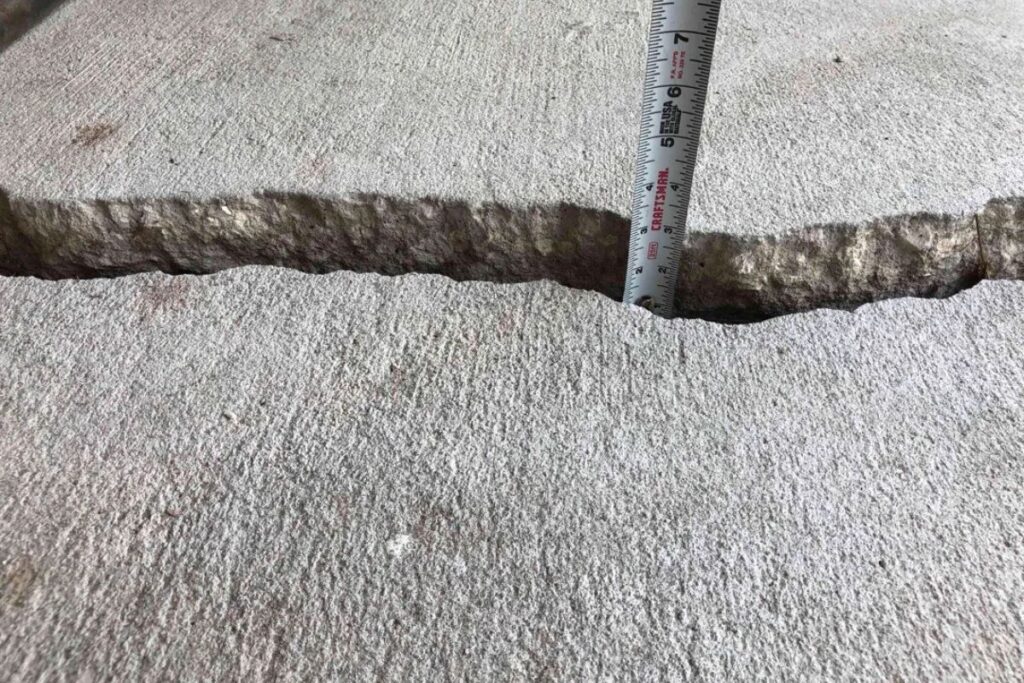
Small hairline cracks are common. The ones that matter grow, run wider than a quarter inch, or step through brick. A diagonal crack running from a door or window corner usually means one part of the slab has dropped.
Doors and Windows That Stick or Gap
When a slab shifts, the frame shifts with it. Doors that once closed easily start to stick, or swing open on their own. Windows jam or leave a gap at one corner. One sticking door might be humidity. Three on the same side of the house point to the slab.
Uneven or Sloping Floors
Roll a marble across the floor in a few rooms: if it always rolls the same way, the floor has a slope. A slope you can feel underfoot, or a dip in the middle of a room, means the slab has settled unevenly. Check the garage floor too; it often shows settling first.
- Cracks wider than a quarter inch, cracks that keep growing, or stair-step cracks in brick.
- Doors and windows that stick, swing open, or leave gaps at the corners.
- Floors that slope, dip, or feel uneven in more than one room.
- Gaps between baseboards and floors, or between walls and ceilings.
- Water pooling against the slab after rain, or damp spots that never dry.
- A chimney or porch pulling away from the main wall.
One sign alone is rarely an emergency, but several together, or any sign that keeps getting worse, is a good reason to book an expert inspection.
Slab Foundation Repair Methods Compared
There is no single best way to fix a slab. The right choice depends on settlement depth, weak soil depth, and whether the slab is still sound.
| Method | What it does | Best for | Watch out for |
|---|---|---|---|
| Polyurethane foam leveling | Foam injected under the slab expands and lifts it toward level | Sound slabs, small to moderate lifts | Cannot fix a badly cracked slab |
| Mudjacking | Cement slurry pumped under the slab fills voids and raises it | Larger lifts, patios and garage floors | Heavier, slower cure, adds weight to soft soil |
| Steel push piers | Steel piers reach stable soil and carry the slab | Deep settlement, slabs that keep sinking | Bigger job, needs room for equipment |
| Epoxy crack injection | Epoxy injected into a crack bonds the concrete | Stable cracks, sealing out water | Does not lift a slab |
Foam leveling is often the first choice for a slab that has sunk an inch or two. Foam is injected through small holes, the slab rises as the foam expands. Mudjacking does the same job with a slurry of cement, soil, and water. It suits bigger lifts and larger areas, but the slurry is heavy, and on soft Red River bottomland that extra weight can matter.
Steel push piers are the answer when leveling falls short. If the slab keeps sinking, or the weak soil runs deep, piers bypass the bad soil entirely. Steel piers are driven through the slab to firm soil or rock, and the slab is lifted and held on them. Epoxy injection is a repair, not a lift. It bonds a cracked slab back together and seals the crack against water, and it fits cracks in a slab that has stopped moving.
What Drives the Cost of Slab Repair in Bossier City
Homeowners often ask for a single number, but slab repair does not work that way. A small foam lift in one room is a different job from piers under a whole house. The factors below are what a specialist weighs.
How Far the Slab Has Settled
Depth of settlement is the biggest driver. A slab that has dropped half an inch needs a small lift and a little material. A slab that has dropped several inches needs more material, more lift points, and more time. An uneven drop takes more care, because the lift must be controlled so the slab does not crack as it rises.
How Much of the Slab Is Affected
Area matters as much as depth. One settled room is a small job. A whole house that has settled on two sides is a large one. Piers, injection points, and material all grow with the area. Access matters too: a garage slab is easy to reach, while a finished living room takes more care and more time.
The Soil Under the Slab
Bossier City clay is not the same everywhere. Shallow, firm soil means a leveling job may hold for years. Deep, soft clay means piers may be needed to reach stable ground. A specialist may check the soil and lot drainage before choosing a method, because the soil decides whether a surface fix will last.
- Settlement depth and pattern: a small, even drop is simpler than a deep, uneven one.
- Affected area: one room versus a whole house changes the scope.
- Soil depth and strength: deep, soft clay may call for piers instead of leveling.
- Access: open garage floors are easier to work on than finished living spaces.
- Drainage: a fix that ignores a leaking pipe or a bad downspout will not last.
- Slab damage: a cracked slab may need injection work as well as a lift.
The honest answer to “what will it cost” is that it depends on those six factors. The only way to know is a written estimate after an expert inspection, naming the method, the area, and the materials.
Newer Subdivisions vs Older Bossier Homes
Bossier City has two very different kinds of slab homes. Newer subdivisions off Airline Drive, Benton Road, and the Swan Lake area went up on graded, filled lots. Fill settles as it compacts, and if it was not compacted well, the slab above it settles too. The signs show up early: a crack across the garage floor, a door that starts to stick, or a patio that tilts away from the house.
For newer homes, the slab itself is usually sound, and the settlement is often shallow. Foam leveling or mudjacking can lift the slab back, and fixing the lot drainage can stop it happening again. The key step is finding out whether the fill is still settling.
Older homes closer to the river, and in the 71111 ZIP code, tell a longer story. Their slabs have ridden the wet-dry cycle for decades, so the damage runs deeper: wider cracks, more slope, and settlement that has crept along year by year. The soil under an older home can be softer and deeper than under a new lot, so piers are more likely to be part of the fix. Both kinds of homes share one rule: the soil decides the fix, not the age of the house. See our slab foundation settlement signs guide and cracked slab repair guide for what to do first.
How to Get a Written Estimate You Can Trust
A good estimate is a written document, not a number at the curb. It should name the method, the area, the materials, the prep work, and the warranty. Pelican offers a 20-year structural warranty on qualifying repairs. Ask for the warranty terms in writing.
Compare at least two written estimates. A lower total that leaves out drainage work or crack sealing is not lower at all, because the slab will keep moving. A higher total that fixes the water source may cost less in the long run. Ask each contractor: what is causing the damage, what method matches that cause, what is included, and what happens if the soil is worse than expected?
Start with the Pelican Foundation Repair homepage, the slab foundation repair service page, and the Bossier City service area page. Read our guide to slab foundation repair cost in Shreveport for the view across the river. Then book an expert inspection, so the estimate is based on your own slab and soil.
Frequently Asked Questions
How much does slab foundation repair cost in Bossier City, LA?
It depends on the method, the depth of settlement, and the size of the affected area. A small foam lift is a very different job from piers under a whole house. Your exact scope comes from a written estimate after an expert inspection.
What are the signs of slab foundation problems in Bossier City?
Look for cracks wider than a quarter inch, stair-step cracks in brick, sticking doors and windows, floors that slope or dip, and gaps at the baseboards. Several signs together, or any sign that keeps getting worse, call for an expert inspection.
Is foam leveling or mudjacking better for a Bossier City slab?
Foam leveling suits small to moderate lifts on a sound slab, with little mess and a fast cure. Mudjacking suits larger lifts and bigger areas, but it is heavier and slower to cure. The right choice depends on settlement depth and how soft the soil is.
Do steel push piers work on Bossier City clay soil?
Yes, and they are often the right choice when settlement runs deep. Piers are driven through the weak clay to firm soil or rock, so the slab rests on stable ground instead of moving clay. They suit slabs that keep sinking after leveling.
Can a cracked slab be fixed without lifting it?
Yes, if the slab has stopped moving. Epoxy injection bonds the crack and seals out water. If the slab is still settling, the crack will open again, so an expert inspection should measure movement before anyone injects a crack.
How long does slab foundation repair take?
Most foam leveling jobs finish in a day. Mudjacking takes longer because the slurry needs time to cure. Pier jobs take longer still, since each pier is driven to stable soil and the lift is done in careful stages. Your estimate should give a timeline.
Does homeowners insurance cover slab foundation repair in Louisiana?
Usually not for soil movement or settling, which insurers often treat as maintenance. A sudden covered event, such as damage from a burst pipe or a fallen tree, may be different. Check your policy wording before assuming a repair is covered.
Pelican Foundation Repair
6118 Fairfield Ave, Shreveport, LA 71106, USA
318-585-2003
https://foundationrepairshreveport.com/