 Skip to main content

Steel Push Pier Installation Cost: Price Factors & Shreveport Clay
How much does steel push pier installation cost? Most residential projects in the Shreveport area run $4,000–$15,000+, with the total driven by how many piers your home needs, how deep they must go to reach load-bearing soil, and whether the work is interior or exterior. There is no legitimate flat per-pier price — any contractor quoting one without inspecting your home is guessing, and the guess usually favors them, not you.
Budget $4,000–$15,000+ for a typical Shreveport steel pier job. The two biggest cost drivers are pier count and depth to bearing soil — and in our expansive clay, depth varies street by street, which is why every honest quote starts with a free inspection and elevation readings.
Call (318) 585-2003 – Free Inspection
📊 Steel Push Pier Costs at a Glance
$4,000–$15,000+
Typical project range
12–30+ ft
Depth to bearing soil locally
2–4 days
Most pier installations
Why There Is No Honest Flat Per-Pier Price
You will see ads and flyers quoting a single price per pier — sometimes a suspiciously low one. Here is the problem: a per-pier price assumes every pier is the same job, and no two piers are. One pier might reach load-bearing soil at twelve feet in an open side yard. The next might need to go twenty-eight feet deep under a back patio, next to a gas line, in saturated clay. Same house, wildly different work.
A steel push pier is a section of steel pipe hydraulically driven into the ground until it hits dense, load-bearing strata — the soil layer deep below the shifting surface clay that can actually support the weight of a house. The crew drives each pier in sections, watching a pressure gauge, and stops only when the gauge proves the pier has reached bearing. That depth is unknowable until the pier is being driven. Anyone quoting a flat per-pier price before that moment is either padding the price to cover the worst case — so you overpay — or planning to stop short of real bearing depth, which means you paid for piers that will not hold.
There is a second reason flat pricing fails: pier count itself is a judgment call. Two contractors can look at the same settlement pattern and recommend different numbers of piers. More piers is not automatically better, and fewer is not automatically a deal — what matters is whether the plan matches the elevation readings. A per-pier price rewards the contractor for selling you more piers, which is a conflict of interest you do not want baked into the pricing model.
So when you hear a per-pier number, treat it as a rough budgeting figure, not a quote. Real quotes are project quotes: this many piers, to this depth, at these locations, for this total. Anything less specific than that is a guess dressed up as a price.
What a Full Steel Push Pier Job Costs in Shreveport
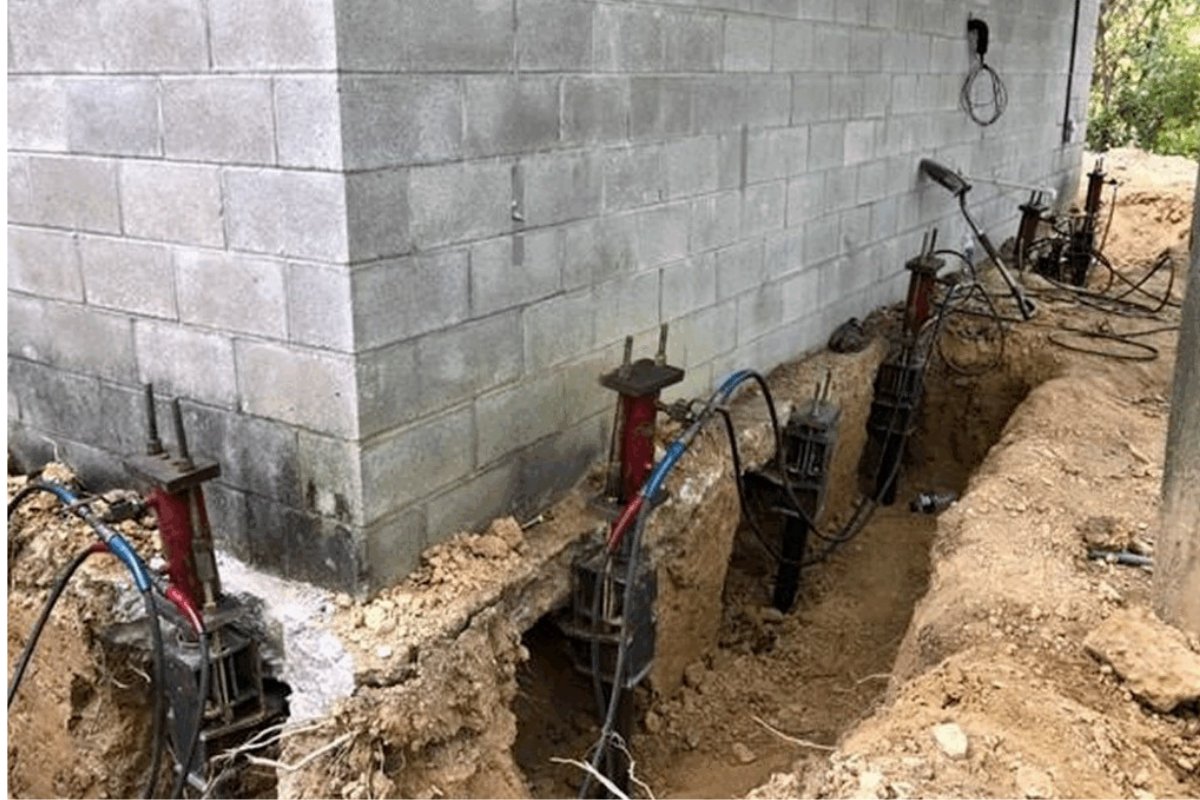
With the caveat that every home is different, here are the project ranges we actually see across Shreveport, Bossier City, and the surrounding parishes. These assume exterior piers on a typical single-family home.
| Job size | Typical pier count | Project cost range |
|---|---|---|
| Small / partial (one corner or wall) | 4–8 piers | $4,000–$8,000 |
| Medium (one to two sides) | 8–14 piers | $7,000–$12,000 |
| Full perimeter | 14–24+ piers | $10,000–$18,000+ |
| Interior piers (slab, through-floor) | Varies | Adds $1,000–$2,500+ per pier |
| Deep bearing soil (25+ ft) | Varies | Adds 15–30% to base project |
Most jobs land in the middle of that table. The small-job end covers a settling corner on a pier-and-beam home in, say, Broadmoor. The full-perimeter end covers a slab home in Southern Hills where the whole foundation has dropped. Interior piers cost more because the crew has to open your slab floor, work inside the house, and restore the concrete — it is slower, dustier, and more skilled work than digging in the yard.
What is included in a proper project quote: excavation, pier driving to verified bearing depth, the hydraulic lift, steel shims, backfill and compaction, site cleanup, and final elevation readings documenting the result. If a quote is missing any of those line items, ask where they are. Our foundation repair cost guide for Shreveport covers how pier pricing compares to other repair methods.
Call (318) 585-2003 – Free Inspection
What Drives Pier Count
Pier count is the single biggest lever on your total price, and it is determined by the settlement pattern — not by the size of the house alone. A large house that has settled evenly might need fewer piers than a small house with one badly dropped corner. This surprises a lot of homeowners who assume price scales with square footage.
Elevation readings are how pier count gets set. During an inspection, a technician takes readings at dozens of points around and through the house, building a settlement map that shows exactly where the foundation has dropped and by how much. Piers go where the map says support is missing. Areas that have not settled do not get piers — driving piers under stable sections is how you create new problems, not how you save money.
Spacing follows the load. Piers are typically placed six to eight feet apart along the affected areas, closer together where the load is heaviest or the settlement is worst. Corners and load-bearing wall intersections often need piers even when the wall between them looks fine, because that is where the structure concentrates weight.
Be suspicious of any quote where the pier count feels like a round guess — exactly ten, exactly twenty — with no settlement map to justify it. A legitimate plan ties every pier to a reading. Ask to see the map. If the contractor cannot show you why each pier is where it is, the count is a sales number, not an engineering one.
Depth to Load-Bearing Soil: Where Shreveport Clay Hits Your Wallet
Here is the factor most homeowners never think about, and the one that makes Shreveport pricing unique. Our surface soil is expansive clay — the kind that swells when wet and shrinks when dry, heaving and dropping foundations with the seasons. Steel piers have to punch through that entire active clay layer and seat into the dense, stable strata below it. The deeper that stable layer sits, the more steel, the more driving time, and the more cost per pier.
Across the metro area, bearing depth commonly runs 12 to 30+ feet, and it changes more than people expect. Homes near the Red River bottomland can hit bearing shallower; homes on the clay ridges around Ellerbe, Keithville, and parts of south Shreveport can run deep. Two houses on the same street can differ by ten feet. The USGS soil and geology resources at usgs.gov show how much subsurface conditions vary across northwest Louisiana — and every extra foot of steel, multiplied across a dozen or more piers, adds real money.
This is also why the pressure gauge matters more than any promise. The crew drives until the gauge reads the resistance that proves bearing — not until they hit a round number of feet, and not until they get tired. A contractor who stops at a predetermined depth is selling you depth, not support. Ask how bearing is verified on your job, and expect the answer to be the gauge, on every pier, documented.
Deep bearing soil is not bad news — it just costs more. Piers seated at twenty-eight feet in verified bearing strata will hold for decades. Piers stopped at twelve feet because the quote assumed twelve feet will not. Depth is where cheap quotes cut corners, because it is the one cost driver the homeowner cannot see from the surface.
Call (318) 585-2003 – Free Inspection
Interior vs. Exterior Piers: Why Access Changes the Price
Exterior piers are the straightforward case. The crew hand-digs a pit at each pier location around the outside of the house, drives the pier, lifts, backfills, and cleans up. The work happens in your yard, you stay in the house, and the process is efficient — most exterior jobs finish in two to four days.
Interior piers are a different job wearing the same name. When the middle of a slab foundation has settled — common in larger slab homes where the perimeter is supported but the center has dropped — piers have to go through the floor. That means cutting and removing sections of concrete inside your home, excavating beneath the slab, driving piers in a confined space, lifting, then pouring new concrete and restoring the floor. It is slower, it requires dust control and floor protection, and it disrupts the household for days.
The price difference is significant: interior piers typically add $1,000–$2,500+ per pier over exterior pricing, and that is before floor restoration costs. Some contractors quote interior work as a separate line item; others bury it in the total. Either way, make sure you know which piers are interior and what the restoration includes — “we pour the concrete back” and “we restore your flooring” are very different promises.
Access issues can push even exterior piers toward interior-style pricing. Tight side yards where equipment cannot fit, piers under a covered patio or addition, and locations blocked by mature trees or hardscaping all slow the work and raise the cost. A good inspection flags these upfront so the quote reflects reality instead of surprising you mid-job.
How a Legitimate Quote Gets Built
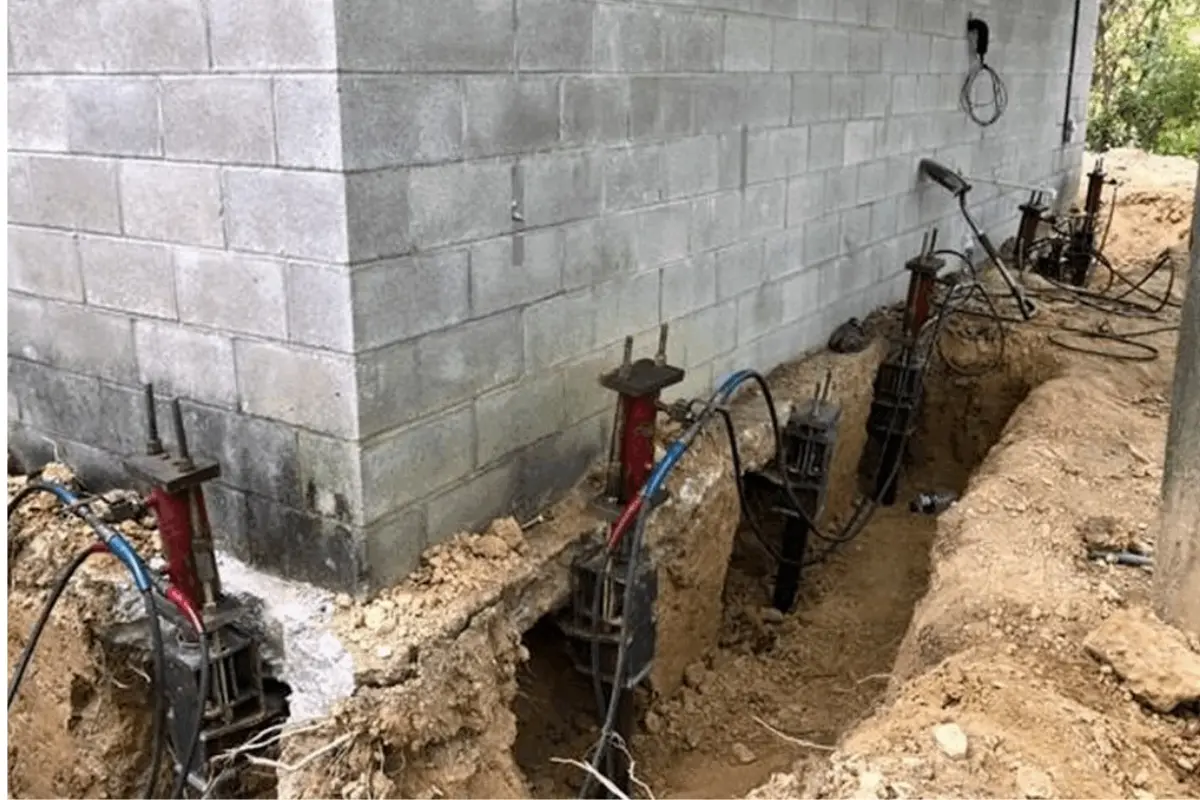
Now you know what to expect from the process. A legitimate steel pier quote is built in a specific order, and you can check each step.
It starts with the inspection: interior and exterior walkthrough, elevation readings at dozens of points, crawl space or slab-edge evaluation, and drainage review. From those readings comes the settlement map — the document that justifies the pier count and placement. No map, no legitimate count.
Next comes the plan: which piers are exterior and which are interior, the expected depth range based on local soil knowledge, any access challenges, and the lift strategy. The contractor should walk you through this in plain language. The InterNACHI foundation standards at nachi.org describe what a thorough structural evaluation should include, and a good contractor’s process will look a lot like that standard.
Then the price: a project total with line items, not a per-pier teaser. It should spell out what is included — excavation, driving to verified bearing, lift, shims, backfill, cleanup, final readings — and what is not, like interior floor restoration beyond concrete or landscaping repair. Our steel push pier installation page details the system and what a complete installation involves.
Finally, the warranty terms in writing. We offer a 20-year structural warranty on qualifying pier repairs — get the terms, the exclusions, and the transfer details in the contract, from any contractor you consider. A warranty that only exists in the sales pitch is not a warranty.
If you are comparing pier types as well as prices, our push piers vs. helical piers breakdown explains when each system is the right choice — because sometimes the cheapest quote is for the wrong pier entirely.
Call (318) 585-2003 – Free Inspection
Red Flags in Low Pier Quotes
A low price is not automatically a scam — efficient crews with local experience can be genuinely competitive. But these patterns are how bad pier jobs get sold, and they are worth knowing before you sign anything.
- Flat per-pier pricing with no inspection. As covered above, this is guessing. The guess either overcharges you or under-delivers on depth. Neither is in your interest.
- No settlement map or elevation readings. If the contractor cannot show you measured data justifying the pier count, the count came from a sales target. Walk away.
- Predetermined pier depth. “We drive all our piers to fifteen feet” is a red flag, not a standard. Bearing depth is proven by the gauge on each pier, and it varies across every job.
- Suspiciously few piers for the settlement shown. Under-piering is the classic cheap-quote trick: fewer piers means a lower total, and the foundation keeps settling after the crew leaves. Compare pier counts across quotes against the same settlement map.
- No mention of bearing verification. Ask directly how they prove each pier reached load-bearing soil. Vague answers mean it is not being verified.
- Pressure to sign today. Foundation work is a five-figure decision. Any contractor who needs your signature before you have compared quotes is telling you something about their business model.
- Warranty details missing from the contract. Verbal warranty promises are worth the paper they are not written on. Terms, duration, exclusions, and what voids it — all in writing, or it does not exist.
The cheapest pier job is the one done right the first time. A failed pier installation — piers that never reached bearing, a lift that did not hold — costs far more to fix than the difference between a low quote and an honest one. In foundation work, the bargain option is usually the most expensive one in the end.
Frequently Asked Questions
How much does it cost to install steel push piers in Shreveport?
Most residential steel push pier jobs in the Shreveport area run $4,000–$15,000+, depending on pier count, depth to load-bearing soil, and whether piers are interior or exterior. Small partial jobs start around $4,000; full-perimeter jobs with deep bearing soil can exceed $15,000. A free inspection gives you an exact project quote.
Why won’t contractors give me a per-pier price?
Because an honest per-pier price is impossible before inspection. Every pier’s cost depends on its depth to bearing soil — which varies 12 to 30+ feet locally — plus access and whether it is interior or exterior. Flat per-pier quotes either overcharge you or under-deliver on depth. Reputable contractors quote the whole project.
How many piers does a typical house need?
It depends on the settlement pattern, not the house size. Small partial jobs use 4–8 piers, medium jobs 8–14, and full-perimeter jobs 14–24 or more. The count comes from elevation readings and a settlement map — any quote without measured data behind the count should be questioned.
Do steel piers go deeper in Shreveport clay?
Often, yes. Shreveport’s expansive surface clay must be bypassed entirely — piers are driven until the pressure gauge proves they have reached dense, load-bearing strata below the active clay layer. Locally that runs 12 to 30+ feet, and deeper bearing adds 15–30% to the project cost versus shallow jobs.
Are interior piers more expensive than exterior piers?
Yes, significantly. Interior piers require cutting through your slab floor, working inside the home with dust control, and restoring the concrete afterward. They typically add $1,000–$2,500+ per pier over exterior pricing. They are necessary when the center of a slab has settled and exterior piers cannot reach it.
How long does steel pier installation take?
Most residential exterior pier jobs take 2–4 days: excavation, pier driving to verified bearing depth, the hydraulic lift, and backfill with cleanup. Interior pier work adds time. You can stay in the home throughout — exterior work happens entirely outside.
What should a steel pier warranty cover?
Look for a written structural warranty — we offer 20 years on qualifying pier repairs — with clear terms on what is covered, what voids it, and how claims work. Get it in the contract, not just in the sales pitch. Be wary of lifetime warranty claims with pages of exclusions.
Call (318) 585-2003 – Free Inspection
Get a Free Pier Inspection in Shreveport
Steel pier pricing is honest only when it is based on your home’s actual settlement — elevation readings, a settlement map, and local knowledge of Shreveport clay. A free inspection gives you all three, plus a written project quote with no obligation.
Call Pelican Foundation Repair at (318) 585-2003, or visit Pelican Foundation Repair to schedule. We serve Shreveport and surrounding areas — see our service areas and explore all foundation repair services.
Pelican Foundation Repair 6118 Fairfield Ave, Shreveport, LA 71106, USA 318-585-2003 https://foundationrepairshreveport.com/