 Skip to main content

Tilting Chimney Repair in Shreveport LA: Causes, Fixes & Costs
Is your chimney pulling away from the house? A tilting chimney is almost never a brick problem — it is a foundation problem. When the ground under a chimney settles unevenly, the whole stack leans, and because chimneys are tall and heavy, even an inch of lean at the base looks dramatic at the top. In Shreveport, where expansive clay soil swells and shrinks with every rain cycle, leaning chimneys are one of the most common early signs that a home’s foundation is moving.
Here is the plain-English version. Most chimneys in North Louisiana sit on their own footing, separate from the house foundation. When the soil under that footing dries out and shrinks — which it does every summer in Caddo Parish — the chimney drops while the rest of the house stays put.
The short version: a tilting chimney is repaired by installing steel piers under the chimney footing to stabilize and lift it back toward its original position — not by rebuilding the bricks. In Shreveport, chimney pier repairs typically run $3,000 to $10,000, and most jobs finish in a single day. A free inspection with elevation measurements tells you whether the lean is a foundation issue or a masonry problem.
Call (318) 585-2003 – Free Inspection
📊 Tilting Chimney Repair at a Glance
2–4
Steel piers a typical chimney needs
$3,000–$10,000
Typical chimney pier repair range in Shreveport
1 day
Most chimney pier repairs take a single day
Why Chimneys Tilt in the First Place
A chimney is the heaviest, narrowest part of a house — tons of brick stacked on a small footprint. That combination makes chimneys the first thing to move when the soil underneath gives way. There are three common reasons, and knowing which one you are dealing with decides what the fix looks like.
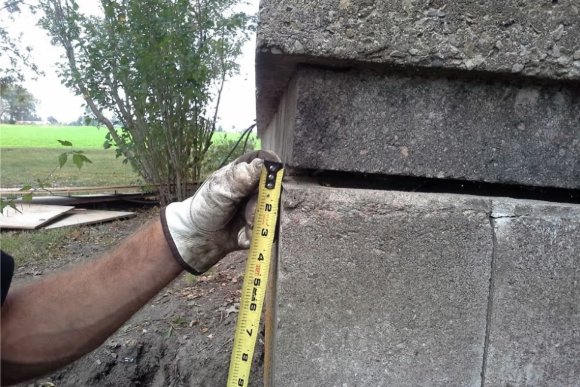
The chimney footing settled. This is the big one in Shreveport. The chimney sits on its own small footing, and when the clay soil under it shrinks during dry months, the footing drops. Because the footing is small, even a little settlement shows up as a visible lean. You will see a gap between the chimney and the house wall that is wider at the top than the bottom.
The footing was never deep enough. Some older chimneys in neighborhoods like Highland and Broadmoor were built on footings that do not reach below the active clay zone, so they shift with every seasonal moisture cycle no matter how many times the mortar gets repointed.
The whole foundation settled, not just the chimney. Sometimes the chimney is the canary in the coal mine. If doors are sticking, floors slope, and cracks run across the brickwork elsewhere, the chimney lean is one symptom of a larger foundation problem. That changes the repair: stabilizing the chimney alone is not enough, because the rest of the house is still moving.
Warning Signs Your Chimney Is Tilting
A lean that is obvious from the street is a late-stage sign. Here is what to look for before it gets that far:
- A gap between the chimney and the house wall. Look where the chimney meets the siding or brick of the house. A gap that is wider at the top than the bottom means the chimney is rotating away from the structure.
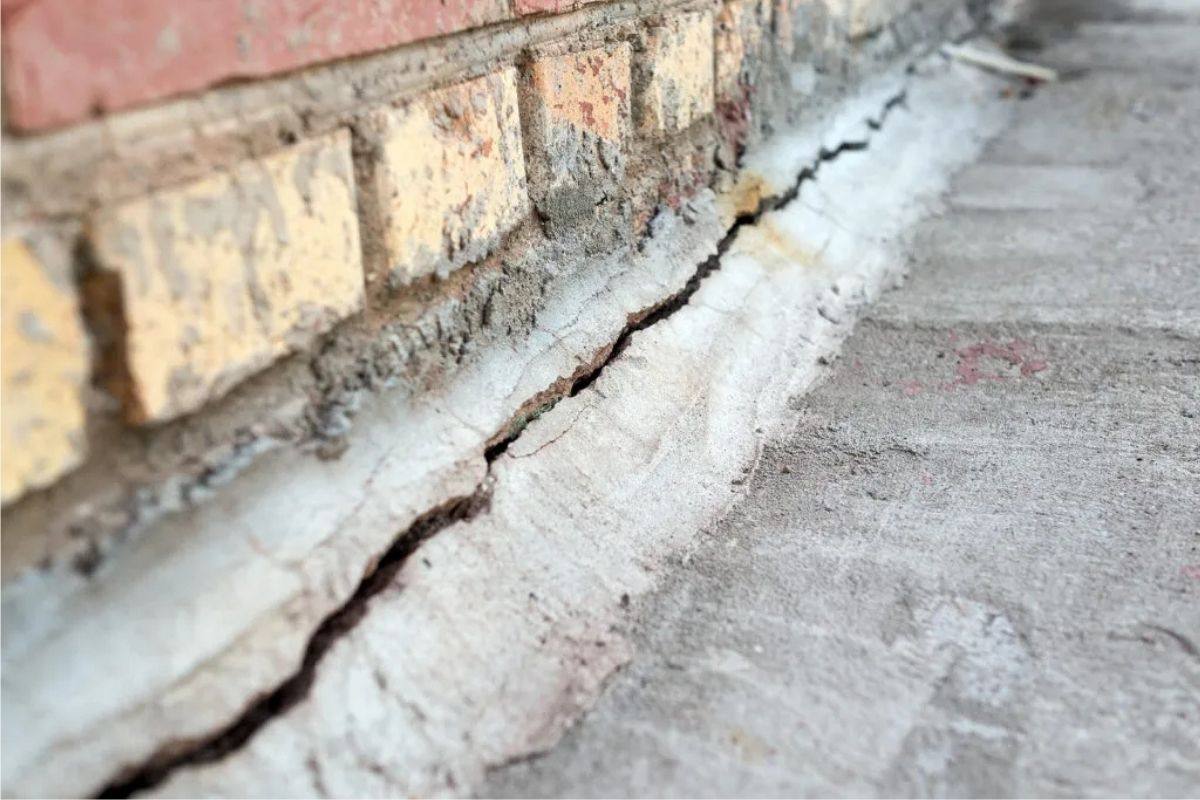
- Cracked or crumbling mortar at the base. When the chimney shifts, the mortar joints near the bottom take the stress first. Fresh cracks low on the stack are a red flag.
- Water getting in around the chimney. The flashing where the chimney passes through the roof is sized for a plumb chimney. A leaning one opens a gap that lets rain in — stained ceilings near the fireplace are a classic clue.
- The firebox or flue lining is cracked. If you can see cracked clay flue tiles looking up from the firebox, the chimney has moved enough to damage the liner. This is both a structural issue and a fire-safety issue.
- Doors and windows near the chimney stick. When the chimney drops, it can pull on the adjoining framing and brick veneer, pinching door frames and window tracks on that side of the house.
- Cracks in the chimney crown. The concrete cap on top of the chimney cracks when the stack twists. A cracked crown lets water soak into the masonry and freeze-thaw cycles do the rest.
If you see any of these, do not wait for the next storm season. A chimney that is moving now will move more when the next long dry spell shrinks the clay under it.
Call (318) 585-2003 – Free Inspection
Foundation Problem or Masonry Problem? How to Tell
Homeowners call masons for leaning chimneys all the time, and sometimes that is the right call. But rebuilding brick on a settling footing is like painting a car with a flat tire — the lean comes back. Here is how to tell which problem you actually have:
| What you see | Likely a masonry problem | Likely a foundation problem |
|---|---|---|
| Deteriorating bricks and mortar | Surface spalling, crumbling joints, but the stack is plumb | Mortar cracks that follow a shifting pattern, wider on one side |
| Gap between chimney and house | Narrow and uniform from top to bottom (caulk joint aging) | Wider at the top — the chimney is rotating away from the house |
| Other parts of the house | Everything else is fine — doors, floors, walls all normal | Sticking doors, sloping floors, or cracks elsewhere in the home |
| History of the lean | Lean appeared after a storm damaged the upper bricks | Lean worsens gradually, season after season |
| Who fixes it | A mason: tuckpointing, crown repair, or partial rebuild | A foundation contractor: piers under the footing, then masonry touch-up |
When in doubt, start with a foundation inspection rather than a mason’s estimate. An elevation survey takes minutes and tells you definitively whether the chimney footing has dropped. Our guide on when to get a foundation inspection explains what the measurements mean. And if the whole house is moving too, read our overview of foundation repair options before spending a dollar on brickwork.
How a Tilting Chimney Gets Repaired
When the diagnosis is settlement, the fix is underpinning — steel piers driven through the soil to stable ground, attached to the chimney footing, then used to lift and lock the chimney back toward plumb. Here is the process step by step:
Step 1: Elevation survey. The contractor measures how far the chimney footing has dropped and in which direction it is rotating. This decides where the piers go — usually on the side that dropped, sometimes on two sides for a chimney that is both sinking and twisting.
Step 2: Expose the footing. Small pits are dug alongside the chimney footing, just enough to work, then backfilled afterward.
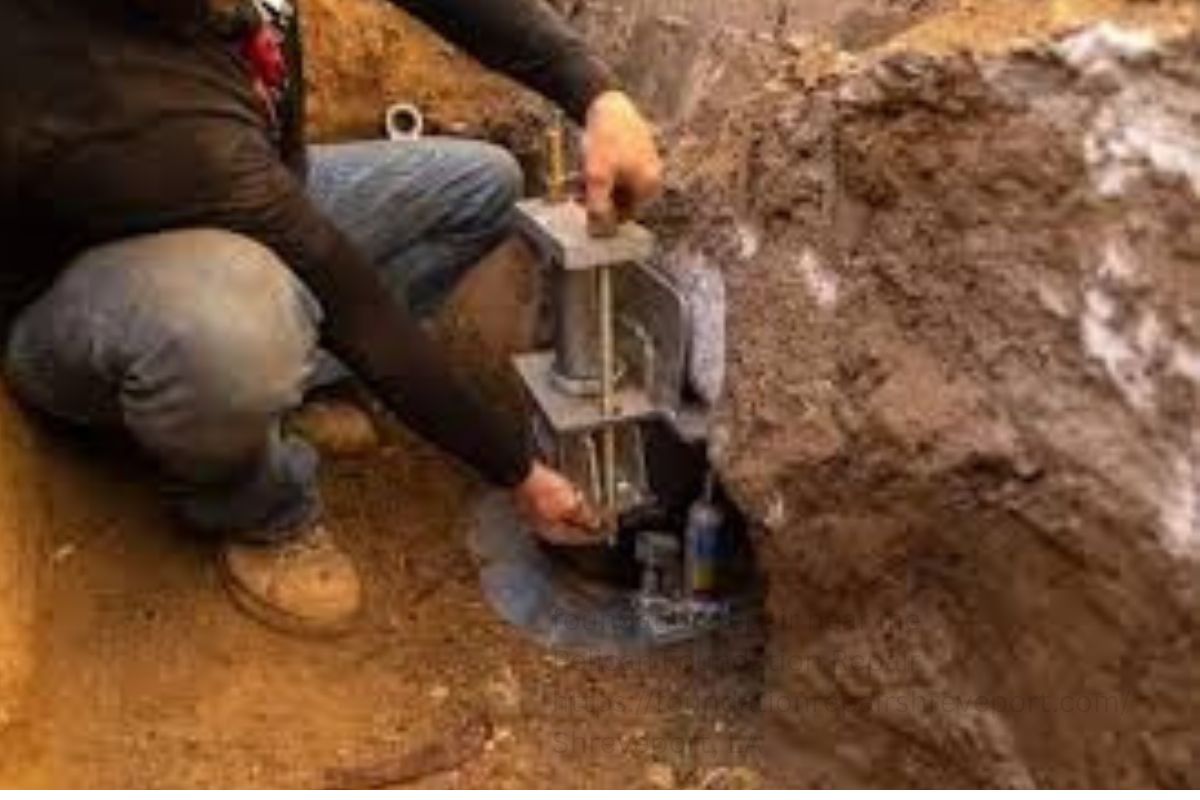
Step 3: Drive the piers. Helical piers are screwed past the unstable clay into load-bearing soil, or steel push piers are hydraulically driven until they hit refusal. Each pier’s capacity is verified during the drive.
Step 4: Lift and lock. Brackets connect the piers to the footing, and hydraulic jacks lift in small increments while the crew watches the chimney with levels. Most chimneys come back most or all of the way to plumb. Then the brackets are locked off permanently.
Step 5: Masonry follow-up. Once the chimney is stable, cracked mortar joints are tuckpointed, the crown is repaired if damaged, and the flashing is reset against the now-plumb stack. This is when the mason’s work actually makes sense — on a foundation that will not move again.
Chimneys suit pier repair well: heavy enough to resist the lift but light enough that 2 to 4 piers usually do the whole job. Our helical pier lifting guide explains the mechanics in more detail.
Call (318) 585-2003 – Free Inspection
What Tilting Chimney Repair Costs in Shreveport
Chimney pier work is priced per pier, just like whole-house underpinning — but a chimney only needs a few piers, so the total stays well below a full perimeter job. Here are honest ranges for the Shreveport market:
| Cost item | Typical Shreveport range | Notes |
|---|---|---|
| Per pier, installed | $1,500–$2,500 | Helical or push pier, bracket, excavation, lift |
| Standard chimney repair (2–4 piers) | $3,000–$10,000 | Most residential chimneys fall here |
| Chimney plus adjoining wall | $8,000–$20,000 | When settlement has spread beyond the chimney |
| Masonry follow-up (tuckpointing, crown) | $500–$3,000 | After the chimney is stabilized and plumb |
| Flue liner repair or replacement | $1,000–$5,000 | If movement cracked the clay liner |
The number of piers is the main cost driver, and that comes straight from the elevation survey. A free inspection should give you the pier count and a firm written price. We back qualifying pier repairs with a 20-year structural warranty, so the lean does not come back.
Why Shreveport Chimneys Are Especially Prone to Tilting
North Louisiana’s soil profile is rough on chimneys. The surface layer across Caddo Parish and Bossier Parish is expansive clay — soil that swells when wet and shrinks when dry. LSU AgCenter research at lsuagcenter.com documents how dramatically these soils change volume with moisture.
A house foundation spreads its load across a long perimeter, so it tolerates some soil movement. A chimney concentrates several tons on a footing barely bigger than the stack itself — so the same soil movement that barely registers on the house shows up as a visible lean on the chimney. Add these Shreveport-specific factors and chimneys are almost always the first casualty:
- Long summer dry spells. Weeks of 95-degree heat pull moisture out of the clay, and the soil shrinks away from footings. This is when most chimney lean visibly worsens.
- Heavy spring downpours. When the rains return, clay swells fast — but it does not lift a dropped footing back up. Each wet-dry cycle ratchets the chimney a little lower.
- Shallow original footings. Many mid-century chimneys were built on footings above the depth where clay stops moving seasonally. They have been cycling up and down for decades.
The takeaway: in Shreveport, a leaning chimney is rarely “just settling in.” It means the footing sits in the active clay zone, and piers that reach stable ground are the permanent fix.
Frequently Asked Questions
Can a leaning chimney be straightened, or does it have to be rebuilt?
In most cases it can be straightened. Steel piers under the chimney footing lift it back toward plumb in small, controlled increments — a full rebuild is only needed if the brickwork itself is too deteriorated to save, which is rare.
How do I know if my chimney problem is the foundation or the bricks?
The key test is the gap between the chimney and the house: if it is wider at the top, the chimney is rotating on a settling footing — a foundation issue. If the stack is plumb but the mortar is crumbling, it is a masonry issue. A free elevation survey settles it in minutes.
How much does it cost to fix a tilting chimney in Shreveport?
Typically $3,000 to $10,000 for a pier repair, depending on whether the chimney needs 2, 3, or 4 piers. Masonry follow-up like tuckpointing or crown repair runs $500 to $3,000 extra if needed.
How many piers does a leaning chimney need?
Most residential chimneys need 2 to 4 piers. Two piers handle a chimney that dropped on one side; three or four are needed when the chimney is both sinking and twisting, or when settlement has spread to the adjoining wall.
Will the chimney lean again after the repair?
Not from the same cause. The piers bear on deep, stable soil below the active clay zone, so seasonal shrinking and swelling can no longer move the footing. Quality repairs include a long written structural warranty.
Is a leaning chimney dangerous?
It can be. A severely leaning chimney can shed bricks, collapse in high wind, or let fire escape through cracked flue liners. If the lean is visible from the street or the flue is cracked, treat it as urgent and stop using the fireplace until it is evaluated.
Can I just repoint the mortar instead of fixing the foundation?
Repointing fixes the appearance, not the cause. Fresh mortar on a chimney that is still settling will crack again within a season or two. Stabilize the footing first, then do the masonry work on a chimney that will stay put.
Call (318) 585-2003 – Free Inspection
Get a Free Chimney Assessment in Shreveport
If your chimney is pulling away from the house, the first step is not a mason — it is a measurement. Our free assessment includes an elevation survey of the chimney footing, a clear answer on whether you are dealing with settlement or masonry, and a written pier count and price if piers are needed.
Call Pelican Foundation Repair at (318) 585-2003, or visit Pelican Foundation Repair to schedule. If the problem turns out to be bigger than the chimney, we handle that too — see our structural repair and foundation inspection services across Shreveport and surrounding areas.
Pelican Foundation Repair 6118 Fairfield Ave, Shreveport, LA 71106, USA 318-585-2003 https://foundationrepairshreveport.com/