 Skip to main content


Yard Drainage Options That Protect Your Foundation in Louisiana
From French drains to swales, the right yard drainage keeps Shreveport’s heavy rains away from your foundation. Here are your best options, what they cost, and which fits your yard.
If you live anywhere in Louisiana, the smartest yard drainage moves roof and surface water at least 10 feet away from your home, usually with a mix of extended downspouts, proper grading, and French drains or shallow swales. Start with downspout extensions, since roof runoff is the single biggest source of water sitting against your foundation.
Most foundation problems in the Shreveport area don’t start with the foundation at all. They start with the yard. Our local clay soil swells when it soaks up a spring downpour, then shrinks and cracks during a dry August. That swell-and-shrink cycle pushes and pulls on your foundation every year. Poor drainage feeds the cycle. Good drainage starves it.
This guide walks through every practical yard drainage option for Louisiana homes, from the free fixes you can do this weekend to the systems worth hiring a contractor for. You’ll also learn what yard drainage honestly can and cannot do, so you don’t pay for the wrong fix.
Why Louisiana Yards Are So Hard on Foundations
Northwest Louisiana soil is mostly expansive clay. When it rains, clay drinks water and swells, pushing sideways against your foundation walls. When a dry spell hits, the clay shrinks and pulls away, leaving gaps where water rushes in during the next storm. Shreveport gets both extremes in the same year, sometimes in the same month.
Gulf humidity makes it worse. Warm, damp air means the soil around your home rarely dries out completely, so even normal rainfall keeps the ground near your foundation saturated.
Watch for these warning signs that your yard drainage is failing your foundation:
- Water ponds against the house or in low spots for more than a day after rain
- Mulch beds and soil wash out after storms
- The ground slopes toward your home instead of away from it
- Downspouts dump water right at the base of your foundation
- You see stair-step cracks in brick or new interior cracks after wet seasons
Start With the Cheap Wins: Grading and Downspouts
Before you spend a dime on buried drains, check the two fixes that cost almost nothing and solve a huge share of drainage problems.
Fix your grading
The ground around your home should slope away from the foundation at roughly 6 inches of drop over the first 10 feet. Many yards in older Shreveport neighborhoods, like Broadmoor or South Highlands, have settled into a reverse slope over the decades. A few yards of topsoil and a shovel can re-establish the slope on a small scale, and a grading contractor can re-slope a whole yard in a day or two.
Extend your downspouts
A 2,000-square-foot roof sheds more than 1,200 gallons of water in a single inch of rain. If your downspouts end at the foundation, all of that water lands exactly where it hurts most. Buried or above-ground extensions that carry water 10 feet or more from the house are the single best dollar-for-dollar drainage upgrade a homeowner can make.
The Full Menu: Yard Drainage Options Compared
When grading and downspouts aren’t enough, or when your yard has low spots that hold water no matter what, these are the systems contractors install across Louisiana. Each one solves a different problem, and many homes end up with a combination.
Swales
A swale is a shallow, grass-lined channel that guides surface water across your yard and away from the house. Think of it as a gentle ditch that looks like part of the lawn. Swales work well on larger lots in Keithville, Benton, and Haughton where there’s room to route water to a street, ditch, or low corner of the property.
Catch basins
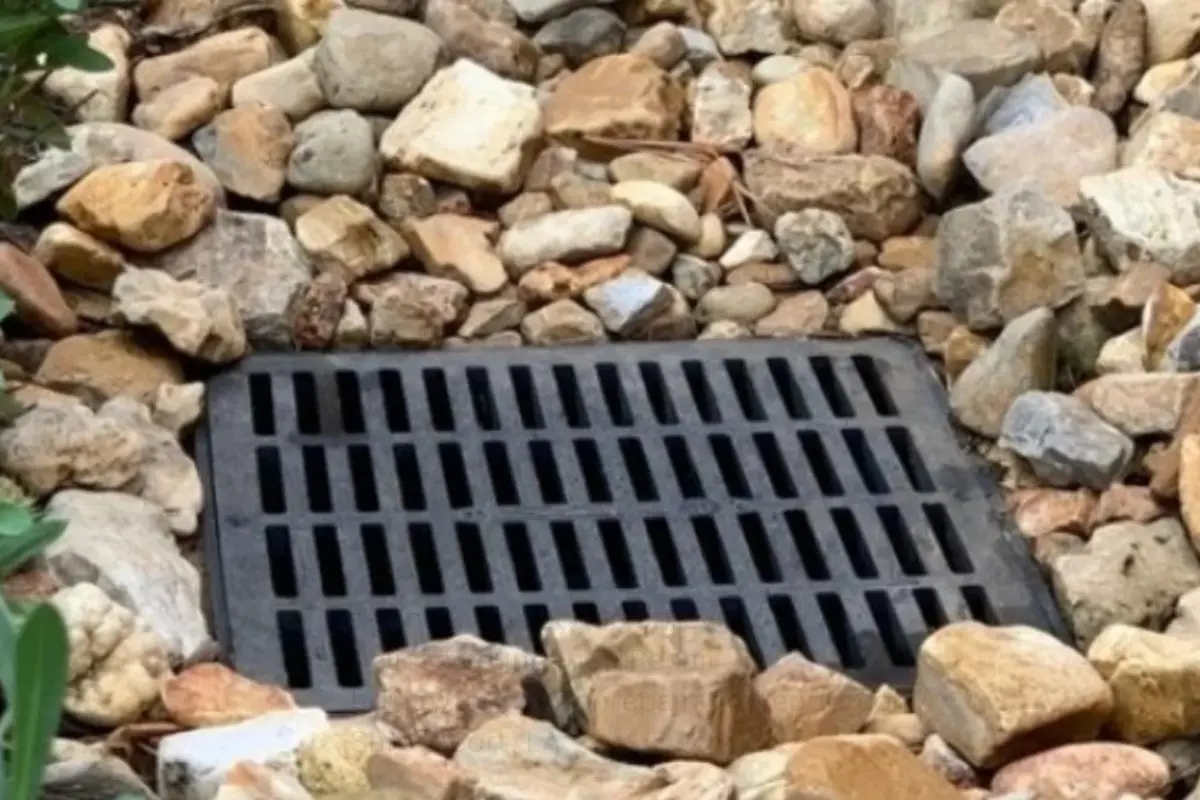
A catch basin is a box drain set into the ground at a low spot, with a grate on top. Water flows in, then a buried pipe carries it away. They’re the right fix for specific trouble spots: the low corner where water always ponds, the patio that floods, the driveway dip. They clog with leaves and pine needles, so plan on cleaning the grate and box twice a year, especially under Northwest Louisiana’s heavy tree canopy.
French drains
A French drain is a gravel-filled trench with a perforated pipe inside, wrapped in filter fabric. It collects groundwater and surface water along its path and carries it to a safe discharge point. French drains are the workhorse of Louisiana yard drainage because they handle both the standing water you can see and the saturated soil you can’t. A properly built French drain lasts decades if the fabric and outlet stay intact.
Dry creek beds
A dry creek bed is a decorative rock-lined channel that functions like an open-air French drain. It handles heavy sheet flow during storms and looks intentional when it’s dry. Homeowners in established neighborhoods love them because they double as landscaping. They work best for routing water across a yard, not for collecting water from a wide area.
Dry wells
A dry well is a buried pit filled with gravel or a plastic chamber that temporarily holds runoff and lets it soak into the ground. They’re useful when there’s nowhere to discharge water at the surface.
| Drainage Option | Typical Cost Range | Best Used For |
|---|---|---|
| Downspout extensions | $10–$60 per downspout (DIY materials) | Roof runoff, first fix for any home |
| Grading correction | $1,000–$3,500 | Reverse slope, water flowing toward the house |
| Swale | $1,500–$5,000 | Large yards with room to route surface water |
| Catch basin with pipe | $500–$1,500 per basin | Specific low spots, patios, driveways |
| French drain | $2,500–$8,000 | Saturated soil, perimeter protection, soggy lawns |
| Dry creek bed | $1,000–$4,000 | Storm sheet flow that doubles as landscaping |
| Dry well | $800–$2,500 | Nowhere to discharge at the surface (use cautiously in clay) |
Which Drainage Option Fits Your Yard?
The right answer depends on where your water is coming from.
- Roof water: downspout extensions first, then check grading. This covers most homes.
- One or two soggy low spots: catch basins piped to a safe discharge point.
- A wide area of soggy lawn: French drain or a swale, depending on how much room you have.
- Sheet flow racing across the yard in storms: swale or dry creek bed to give it a channel.
- Water with nowhere to go: a discharge plan to the street or ditch matters more than the device. Never dump your runoff onto a neighbor’s property.
If you already have foundation damage, yard drainage is only part of the plan. A drainage correction service pairs the right yard system with foundation waterproofing or repair, so you stop the water and fix what it damaged. The same inspection should also check your foundation grading and slope, because drainage and grading work as a team.

What Yard Drainage Can and Cannot Do
Let’s be straight about this, because it saves homeowners real money. Yard drainage is protection, not repair. It keeps water from reaching your foundation, which stops damage from getting worse and keeps repaired foundations stable. It does not lift a settled slab, close a structural crack, or re-level a pier-and-beam home.
That means the order of operations matters:
- Active settlement or structural cracks: repair the foundation first, then add drainage so the repair lasts. Water pressure is what breaks repairs that don’t address the source.
- No damage yet, but poor drainage: drainage now is the cheapest foundation protection you can buy.
- Minor cosmetic cracks and dampness: drainage plus monitoring is often the right call, with a free inspection to confirm nothing structural is happening.
Read up on the signs of drainage problems around your foundation so you can tell which situation you’re in before you call anyone.
What Does Yard Drainage Cost in Shreveport, LA?
Most homeowners in the Shreveport area spend between $2,500 and $8,000 for a complete yard drainage project, depending on the size of the yard and how many systems are combined. Simple downspout extensions and re-grading can come in under $1,500. A long French drain with multiple catch basins on a large lot in Blanchard or Mooringsport can run higher.
Get at least two quotes, and make sure each one includes a discharge plan. A drain with no place to send the water is just a very expensive hole. Ask where the pipe exits, how the outlet is protected from erosion, and who maintains it. Any contractor who can’t answer those three questions clearly isn’t ready for Louisiana clay.
Pelican Foundation Repair offers free inspections across the Shreveport area, and our team looks at drainage as part of every foundation evaluation. Visit our homepage to see the full list of services, or dig into how full foundation drainage systems work in Shreveport, LA for the deeper technical picture.
Keeping Your Drainage System Working
A drainage system is only as good as its maintenance. Louisiana’s pine needles, oak leaves, and red-clay sediment are relentless about clogging things. Twice a year, in spring and fall, walk your system and check these items:
- Clean gutters and downspout screens so roof water actually reaches the extensions
- Clear leaves and debris off catch basin grates
- Check swales and dry creek beds for sediment buildup that blocks flow
- Walk the discharge point after a hard rain and confirm water is flowing freely
- Look for new ponding that suggests a pipe has settled, crushed, or clogged
Don’t forget the connection between your gutters and your yard system. Our guide to gutter and downspout drainage for your foundation shows how the roof and the yard work together. And if you want the broader picture of how water management fits into home health, the LSU AgCenter publishes practical Louisiana-specific stormwater guidance, while the EPA offers homeowner resources on managing runoff on your property.
Frequently Asked Questions
How far should I extend my downspouts away from the house?
At least 10 feet, and farther is better on flat lots. The whole point is to get roof water past the backfill zone, which is the loosened soil right against your foundation that water moves through fastest. Short extensions that dump at 4 feet barely help.
Do I need a French drain or will a swale do the job?
It depends on your yard. A swale handles surface water on a lot with enough slope and room. A French drain handles both surface water and soggy, saturated soil, and it works on flatter lots where a swale would just sit there. Many Shreveport yards need a French drain along the foundation plus a swale farther out.
Why does my yard flood every time it rains hard in Shreveport?
Usually a combination of clay soil that drains slowly, flat grading, and nowhere for the water to go. Shreveport storms can drop several inches in an hour, and clay can’t absorb it fast enough. A drainage system gives that water a path off your property instead of letting it pool against your home.
Will fixing my yard drainage repair my cracked foundation?
No, and anyone who tells you otherwise is selling you something. Drainage stops water from causing more damage, and it protects a repair once it’s done. But existing settlement or structural cracks need foundation repair first. That’s why we inspect the foundation and the yard together.
How much does it cost to fix yard drainage in Louisiana?
Simple fixes like downspout extensions and re-grading run under $1,500. A French drain system typically costs $2,500 to $8,000. Most complete yard drainage projects in the Shreveport area land between $2,500 and $8,000 depending on yard size and the number of systems involved.
Can I install a French drain myself?
A short French drain is a doable DIY project if you’re comfortable digging a trench with consistent slope. The hard parts are getting the slope right, choosing a proper discharge point, and not hitting utilities. Call 811 before you dig, and hire a pro for anything that runs near your foundation or under a driveway.
What does a dry creek bed actually do?
It gives fast-moving storm water a defined channel to follow across your yard instead of cutting ruts through your lawn. When it’s not raining, it’s dry and looks like landscaping. Under the rocks there’s usually a gravel bed that helps water soak in or flow to a discharge point.
How often should I clean out my catch basins and gutters?
Twice a year at minimum, in spring and fall, and after any big storm that drops a lot of leaves. Louisiana trees are generous with debris. A clogged catch basin or gutter is the same as no basin or gutter at all, so put it on your calendar.
Pelican Foundation Repair
6118 Fairfield Ave, Shreveport, LA 71106, USA
318-585-2003
https://foundationrepairshreveport.com/